

A washroom bin might not be the most glamorous purchase decision you'll make, but it's one that has a more noticeable impact than most businesses expect. The wrong bin in the wrong space creates hygiene problems, maintenance headaches and a washroom that looks and feels poorly thought through. The right one does its job quietly and effectively, keeps the space clean between services and fits naturally into the wider washroom setup.
This guide covers everything you need to consider when choosing commercial washroom bins, from bin type and capacity to materials, mounting and how it all ties into the rest of your washroom.
Why Washroom Bin Choice Matters More Than You'd Think
Most people walking into a washroom don't consciously notice the bins. But they'll notice when they're overflowing, when there's nowhere to dispose of waste hygienically, or when the bin looks like an afterthought in an otherwise professional space. That experience reflects directly on the business, whether it's an office, a restaurant, a school, or a healthcare facility.
Hygiene is the primary concern and it shapes almost every decision in this area. A bin that's difficult to open without touching, slow to empty, or prone to odour will undermine the cleanliness of the washroom regardless of how well everything else is maintained. Getting the right product in the right location, sized correctly for the footfall the space handles, is the starting point for a washroom that works well. If you're in hospitality, it's worth reading our guide to what makes a great restaurant washroom, where bin placement sits alongside everything else that shapes the customer experience in that space.
The Main Types of Commercial Washroom Bins and When to Use Them
The commercial washroom bin market covers a much wider range of products than most people realise and the terminology can be confusing if you haven't bought for a commercial space before. Understanding what each type is designed for makes the decision more straightforward.
Pedal Bins
Pedal bins are the most common choice for general waste in commercial washrooms. The foot-operated lid means users never need to touch the bin itself, which significantly reduces the risk of cross-contamination, particularly in high-traffic environments. They're available in a wide range of capacities and finishes and they work well positioned outside cubicles where general waste such as paper towels accumulates. The 20L Pedal Operated Waste Bin is a strong example of this format, with a silent-closing lid, a moisture-resistant base and a stainless steel housing that holds up well in busy washrooms.
Dome-Lid and Chute-Style Bins
Dome-lid and chute-style bins offer a different approach. Rather than a foot pedal, waste is dropped through an opening in the top of the unit, which remains partially closed at all times. This makes them well suited to positioning near sinks or hand dryer stations, where they can catch paper towel waste without requiring the user to touch anything. They also tend to have a sleeker profile, which works well in washrooms where aesthetics matter. The Vivo 30L Slim Bathroom Bin with Chute Style Lid is a good option here, combining a brushed satin finish with a compact footprint that suits tighter spaces.
Sanitary Bins
Sanitary bins are a separate category entirely and serve a specific purpose inside cubicles. They're covered in more detail further in this post, but it's worth flagging upfront that they're a hygiene requirement in any washroom used by women and need to be chosen and positioned correctly.
Where Each Bin Type Should Be Positioned
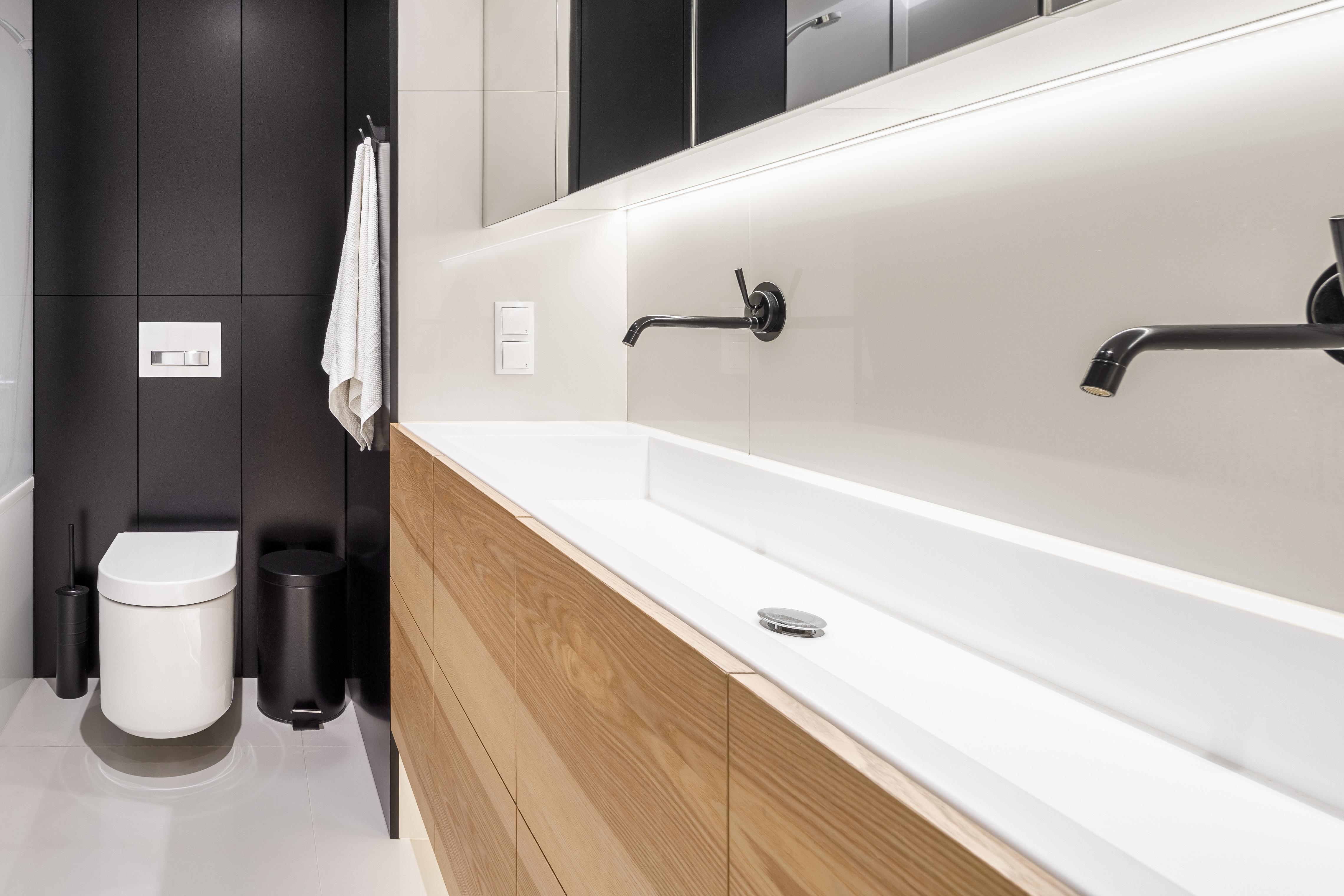
Getting the placement right is just as important as choosing the right bin. Here's how it breaks down by area:
Near the sinks and hand-drying station - This is where general waste accumulates most, so a pedal or chute bin positioned here reduces waste ending up on the floor and keeps the flow natural for users. In larger washrooms with multiple sink stations, a bin at each one works better than a single large bin at one end of the room.
Countertop areas - A chute-style unit mounted directly below or beside the paper dispenser keeps everything in one place and the surface around the sink clear.
Where floor space is tight - Wall-mounted bins are worth prioritising here. Fixing the bin to the wall keeps the floor clear, makes cleaning easier and removes the risk of the bin being moved or knocked over in a busy environment. Some models work either freestanding or wall-mounted, which is useful when fitting out multiple washrooms with different layouts.
Why Bin Capacity Matters in High Traffic Washrooms
Getting the capacity right is about understanding how the washroom is actually used. A bin that's too small will overflow between servicing, which creates both a hygiene problem and a poor impression. A bin that's far too large for the space and traffic level takes up unnecessary room and may go weeks without needing to be emptied, which brings its own odour and hygiene concerns.
For sanitary bins, capacity requirements are generally in the range of 2 to 7 litres for standard use, though high-traffic premises like large office blocks, shopping centres, or leisure facilities may need larger units or more frequent servicing. For general waste bins outside cubicles, most commercial washrooms work well with something in the 20 to 30 litre range, though that depends heavily on whether paper towels are in use. Washrooms using hand dryers rather than paper towels generate considerably less bin waste, which can allow for a smaller unit or less frequent emptying. If you're weighing up which hand drying method makes more sense for your space, our hand dryers vs paper towels guide covers the cost, hygiene and environmental case for both in detail.
What to Know About Washroom Bin Materials Before You Buy
The material your washroom bin is made from affects how long it lasts, how easy it is to keep clean and how it looks as part of the overall washroom. In most commercial settings, the choice comes down to two options and each has its place.
Stainless Steel
Stainless steel is the stronger choice for most commercial washrooms. It's durable, resistant to impact and vandalism, easy to wipe down and holds its appearance well over time. It also sits naturally alongside other washroom fittings like soap dispensers, paper towel dispensers and mirrors, giving the space a cohesive, considered look.
Most commercial stainless steel bins have a plastic inner bin to keep moisture away from the steel and make changing the liner quick and easy, which is a practical combination that holds up well in busy environments.
Plastic
Plastic bins have their place too because they’re lightweight, fully enclosed and straightforward to service. In lower-traffic or lower-budget settings, plastic general waste bins can work well, though they're more prone to discolouration and wear over time.
The Importance of Touchless and Pedal Operation for Hygiene
One of the clearest wins in commercial washroom bin design is removing the need for users to touch the bin at all. Every contact point in a washroom is a potential hygiene risk and a bin that requires the user to lift a lid or push a flap with their hand sits directly against the principle of keeping hands clean after washing.
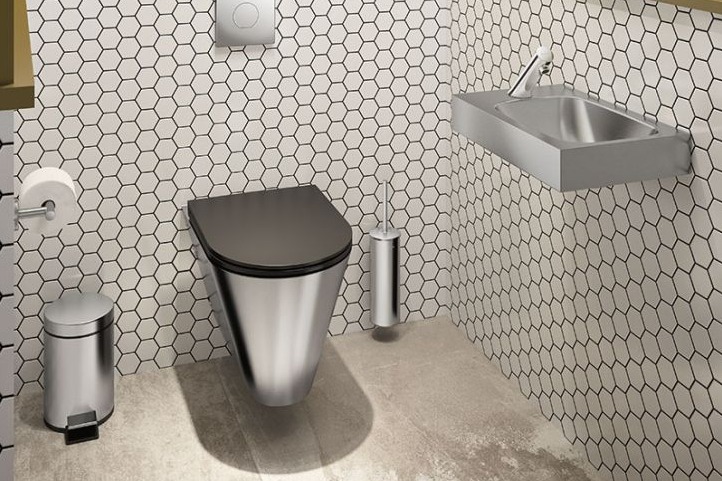
Pedal-operated bins address this completely. The user opens the lid with their foot, drops in the waste and walks away without touching the unit. In environments where hygiene standards are particularly important, including healthcare settings, catering and food service, schools and any washroom used by the public, this is worth prioritising. It also reduces wear on the lid mechanism because the opening force is applied through a robust foot pedal rather than a handle that gets pulled repeatedly throughout the day.
The UK Government's guidance on workplace sanitation facilities sets out the minimum requirements employers have around washroom provision and it's a useful reference point for understanding what's expected of commercial washrooms more broadly.
Why Sanitary Bins Are Non-Negotiable in Commercial Washrooms
Any washroom used by women requires sanitary disposal inside each cubicle and the absence of one reflects poorly on any business regardless of sector.
The priorities here are slightly different from general waste bins. Discretion matters, the bin needs to be fully enclosed to contain odour, compact enough to fit comfortably within a cubicle and operable without the user touching it. The Dolphin 25L Pedal Operated Slim Sanitary Bin ticks all of those boxes, with a slim profile suited to tighter cubicle spaces and a foot pedal that keeps hands away from the bin entirely.
The full sanitary bins collection covers everything from entry-level units through to stainless steel options from Mediclinics, Bobrick and Vivo.
Choosing the right washroom bins for a commercial space comes down to understanding the type of waste being generated, where it's generated, how busy the washroom is and what hygiene and maintenance standards need to be met. Pedal bins for general waste, chute or dome-lid options near sinks and properly specified sanitary bins inside every cubicle form the foundation of a well-equipped washroom. Material, finish, capacity and mounting method all feed into that decision and getting it right means a washroom that stays cleaner, is easier to maintain and reflects well on the business.
If you'd like to explore what's available, the bathroom bins collection at Intelligent Hand Dryers covers a wide range of sizes, styles and formats to suit any commercial space. If you're not sure where to start or need guidance on specifying a full washroom, get in touch with the team and we'll help you find the right solution for your space.

01143540047
02033270448