Most businesses that are still running old warm-air hand dryers or using paper towels have never sat down and worked out what that decision is costing them. The answer tends to be surprising… hand drying is often one of those overheads that never gets scrutinised because it doesn't feel significant enough to bother with. But when your washroom hand dryer is seeing hundreds of uses a day, the difference between the right equipment and the wrong equipment adds up to thousands of pounds a year. Here's what that looks like in numbers.
How Much Your Hand Dryer Setup Is Costing You
The gap between old hand drying technology and modern energy saving hand dryers is considerable. An old-style warm-air hand dryer uses between 20 and 30 watt-hours per dry. A modern high-speed energy efficient hand dryer uses between 2 and 5. That's roughly a 90% reduction in energy consumption per dry. At current commercial electricity rates of 24 to 25p per kWh, that's less than a tenth of a penny per dry, compared to up to 0.75p for an old-style dryer. It might not sound like much, until you multiply it by hundreds of dries a day.
Paper towels look cheaper because the upfront cost is low. The ongoing cost tells a different story:
- A business with 100 daily washroom users, using two towels per dry, spends around £547 per year on paper towels
- At 300 daily uses, that rises to around £1,641 per year
- At 400 daily uses, annual paper towel spend reaches approximately £2,190 per year
None of those figures include the cost of dispensers, bin liners, the time spent restocking, or the additional cleaning caused by paper towel mess. For a detailed breakdown of the full cost comparison, the numbers are laid out in full in the financial analysis of hand dryers vs paper towels.
How Modern Energy Saving Hand Dryers Work Differently
Old warm-air electric dryers work by heating air and waiting for moisture to evaporate. It takes time and it uses a lot of energy. Modern energy efficient hand dryers use high-velocity airflow to physically push water off the skin, with no heat required, far less electricity and a dry time of 10 to 12 seconds rather than 30 to 45.
Sensor activation is the other key difference. A hand dryer that only runs when hands are present wastes nothing. A dryer running on a fixed timer or requiring a button press continues using electricity whether it's needed or not. Every modern dryer in the Intelligent range uses sensor-activated stop-start operation as standard.
Brushless motors take this further. Unlike brushed motors, which generate friction and waste energy as heat, brushless motors run more efficiently, last longer and require less maintenance. They're now standard across the most energy efficient hand dryers in the range.
The Saving at Different Usage Levels
At 100 Daily Uses
At lower traffic levels, the saving against paper towels is around £490 to £540 per year, depending on how many towels are used per dry. The electricity cost of a modern low energy hand dryer at 100 uses per day typically falls between £10 and £20 per year at current commercial electricity rates of around 24 to 25p per kWh. These are approximates and your actual figures will vary, but at this usage level a mid-range hand dryer comfortably pays for itself within the first year.
At 300 Daily Uses
At 300 uses per day, the annual electricity cost of a Dryflow Turboforce comes in at roughly £60 to £65 per year based on current commercial electricity rates. Set that against an approximate paper towel spend of around £1,641 and the annual saving on a single unit is well over £1,500. Your exact figures will depend on your electricity tariff and paper towel usage, but the payback on the purchase price typically happens within weeks rather than months.
At 400+ Daily Uses
At 400 daily uses, the electricity cost of a modern energy saving hand dryer runs to approximately £70 to £90 per year depending on the model and your electricity tariff. Against an approximate paper towel spend of £2,190, that's a saving of well over £2,000 per unit per year. For a venue running ten washrooms (e.g. airports, stadiums, shopping centres, large hospitals) at that kind of usage level, the combined annual saving approaches £20,000+.
The Most Energy Efficient Hand Dryers Available Right Now
Not every hand dryer is equally efficient. These are the standout performers across the Intelligent eco hand dryers range.
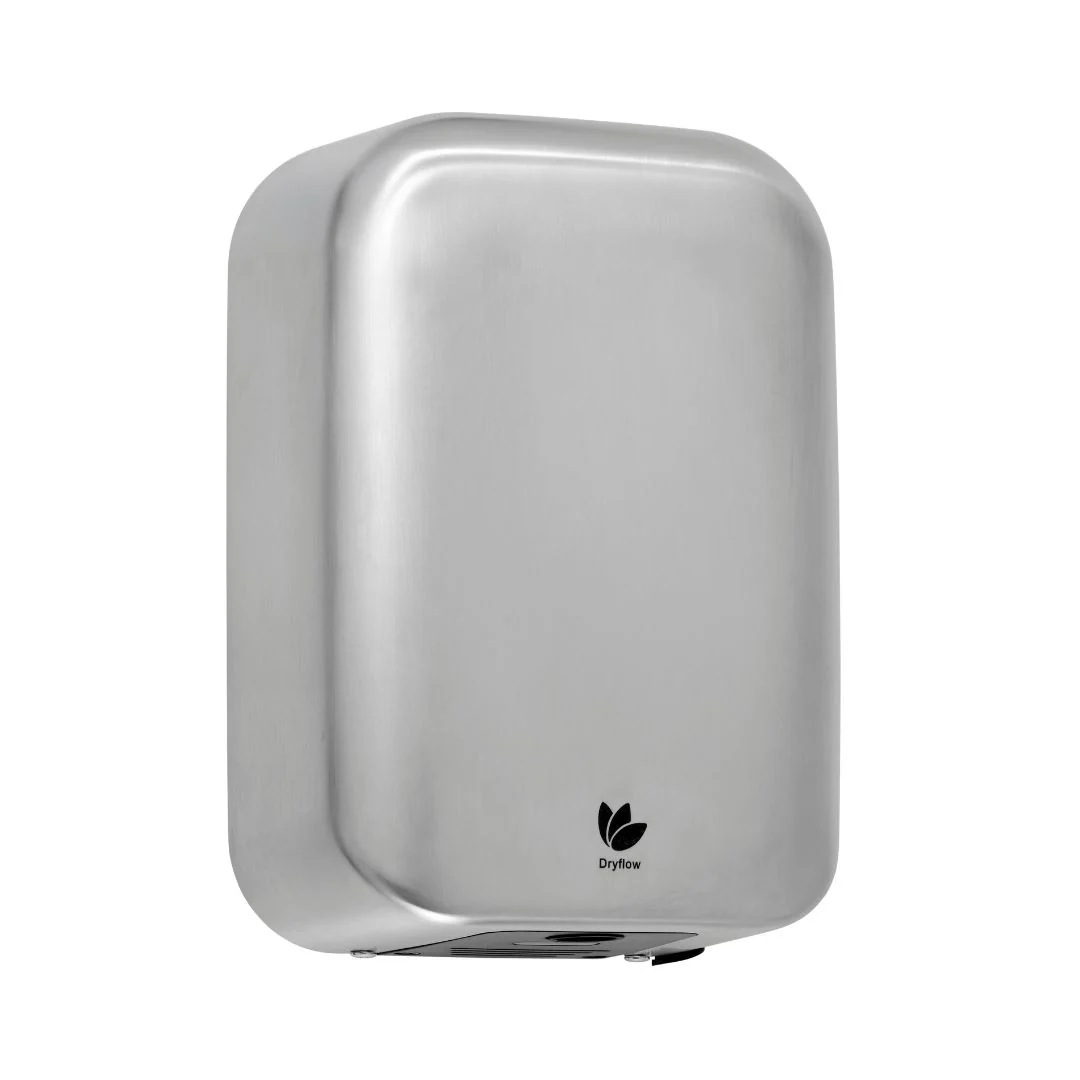
Dryflow Viska
The Dryflow Viska is the most energy efficient hand dryer currently available, running at just 120W without its heater element and delivering 12,500 dries per £1 spent on electricity. For comparison, paper towels deliver 143 dries per £1. The Viska is particularly suited to schools and lower-traffic environments where noise level is a consideration alongside running cost. Despite this low running cost, it still dries hands in 10 to 12 seconds, so there's no speed trade-off for the saving!
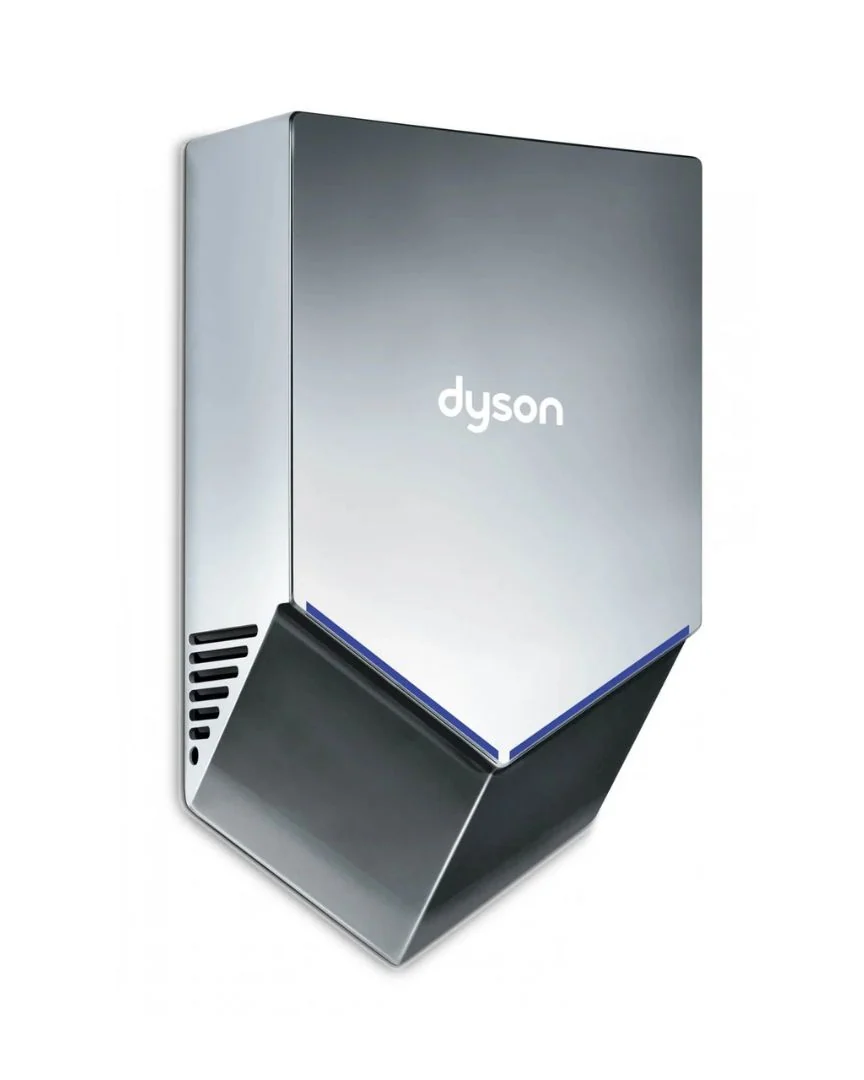
Dyson Airblade V HU02
The Dyson Airblade V HU02 runs at 1kW rated power, down from 1.6kW in earlier models and delivers a 12-second dry time with 1,500 dries per £1 spent on electricity. HEPA filtration removes 99.9% of bacteria from the air drawn through the unit. It's backed by a 5-year warranty with on-site labour in year one. The full Dyson Airblade range runs to several configurations depending on installation requirements.
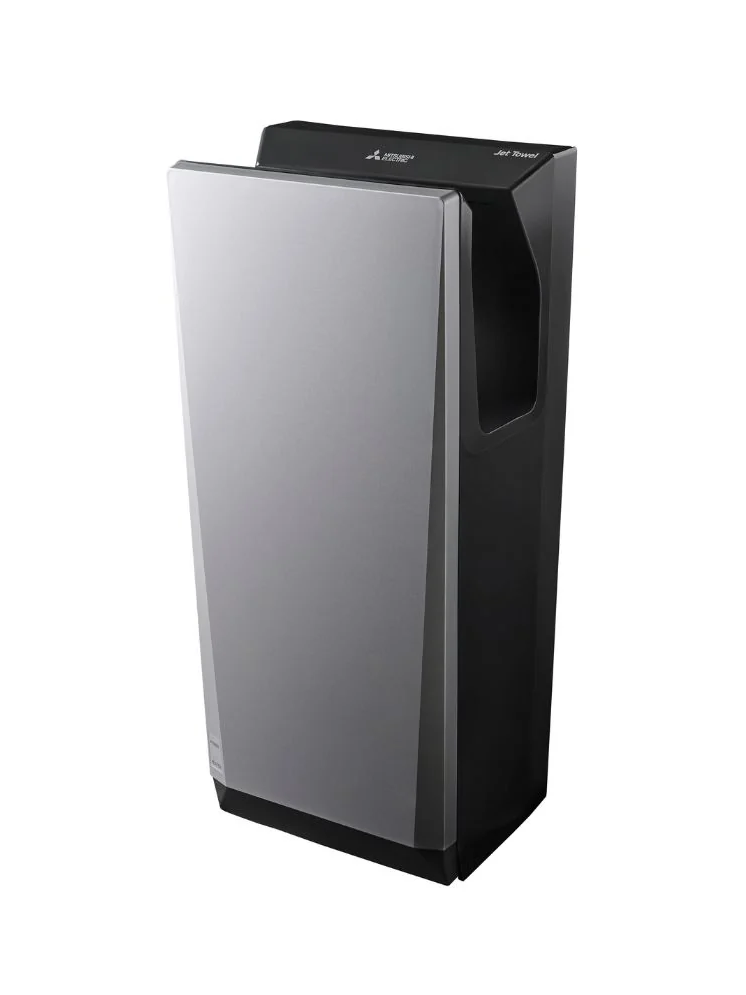
Mitsubishi Jet Towel Wave i01
The Mitsubishi Jet Towel Wave i01 operates at between 0.55kW and 1.24kW depending on settings, with an 11-second dry time and 2,272 dries per £1 spent on electricity. It's consistently rated among the quietest high-speed hand dryers on the market and carries an 8-year guarantee exclusive to Intelligent. For hospitality and healthcare environments where noise is a genuine constraint alongside efficiency, it's the benchmark choice. Mitsubishi hand dryers are available in hands-in and hands-under configurations.
The Carbon Savings Case
The financial case for energy saving hand dryers is clear in the numbers above. The environmental case sits alongside it. A lifecycle assessment conducted by MIT researchers found with high statistical confidence that high-speed hand dryers produce significantly lower carbon emissions per dry than paper towels. It's worth noting that the study was commissioned and funded by Dyson, though the research was conducted to ISO 14040 and 14044 standards and subjected to independent critical review. Based on their analysis, paper towels generate around 15 to 18g of CO₂ equivalent per dry across their full lifecycle, covering manufacturing, transportation and disposal. At 400 daily uses over a year, that adds up to over 2 tonnes of CO₂ from paper towels alone on a single unit. A high-speed energy efficient hand dryer eliminates that consumable lifecycle entirely, with the only ongoing carbon cost being the electricity used during operation.
Switching to a modern eco hand dryer eliminates the consumable lifecycle entirely. The only ongoing carbon cost is the electricity used during operation, which for the most efficient models is negligible. For businesses with carbon reporting requirements, that's a meaningful and measurable reduction.
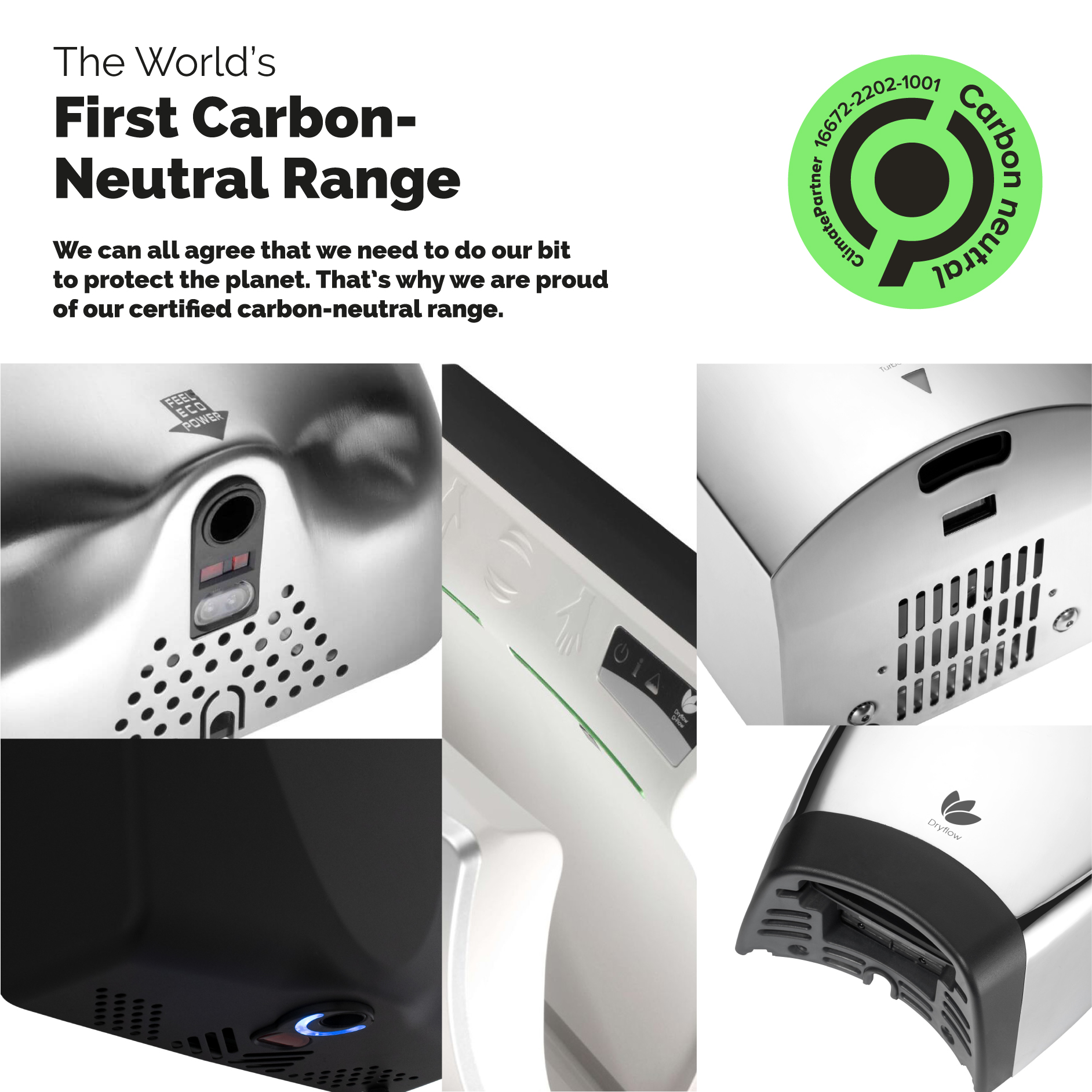
Dryflow Carbon Neutral Range
The Dryflow carbon neutral range is the world's first certified carbon neutral hand dryer range, independently verified by ClimatePartner across the full product lifecycle from manufacturing to end-of-life disposal. For businesses with sustainability targets to report against, specifying carbon neutral equipment means the environmental saving is quantifiable and auditable. How Dryflow achieved carbon neutral certification sets out the detail of the verification process.
How You Can Save Even More Money With Renting Hand Dryers
For businesses that want the running cost saving immediately without the upfront capital outlay, Intelligent offers a rental option. Rental means the saving from ditching paper towels starts from day one, maintenance is included and there's no capital expenditure to find in the budget. For businesses comparing both routes in detail, our reasons to rent guide works through the financial case for each approach, including the accounting treatment differences between a capital purchase and an operating expense.
How to Choose the Right Model for Your Space
The most energy efficient hand dryer for a small office washroom seeing 50 uses a day is a different product to the right choice for a stadium or a hospital corridor. The key variables are:
- Usage level: daily dries per unit determines the required motor durability and speed
- Noise sensitivity: hospitality and healthcare environments need lower decibel outputs than industrial settings
-
Wall space: blade-style hands-in dryers need more depth and a specific installation position
-
Sustainability targets: some businesses now specify carbon neutral as a baseline requirement
Our hand dryer selection guide through these variables and suggests the right models based on your specific requirements.
The saving from switching to modern energy saving hand dryers is measurable from the first month, and it compounds year on year for the decade or more a quality unit remains in service. Even at low traffic levels the payback happens within the first year. At higher usage levels the numbers become significant quickly.
Ready to find out exactly how much your business could save? Speak to our team today on 0114 354 0047 or get in touch online and we'll work out the right setup for your washroom and usage level.

01143540047
02033270448