

Si vous cherchez à installer une table à langer dans des toilettes, vous avez probablement déjà remarqué que les prix varient considérablement. Vous pouvez trouver une unité de base pour environ 200 £ et des modèles dépassant largement les 1 500 £. Qu'est-ce qui explique cette différence et comment savoir quelle est la bonne option pour votre espace ? Ce guide passe en revue les principaux éléments à prendre en compte lors du choix d'une table à langer commerciale, afin que vous puissiez prendre une décision dont vous serez satisfait pendant des années.
Pourquoi certaines tables à langer coûtent-elles beaucoup plus cher que d'autres ?
C'est généralement la première chose que les gens veulent savoir, et c'est une question légitime. La réponse honnête est que le prix reflète un mélange de matériaux, de qualité de fabrication, de caractéristiques d'hygiène et de la façon dont l'unité a été conçue pour supporter une utilisation quotidienne intensive sur une longue période.
Une unité moins chère pourrait parfaitement convenir dans un environnement à faible utilisation comme un petit bureau ou un café tranquille. Mais si vous équipez un centre commercial, un aéroport ou une installation de loisirs très fréquentée où l'unité pourrait être ouverte et fermée des dizaines de fois par jour, la différence de qualité commence vraiment à compter. Les modèles haut de gamme ont tendance à utiliser des matériaux plus durables, des mécanismes d'ouverture plus fluides et plus robustes, sont dotés de meilleures caractéristiques de sécurité et incluent des détails d'hygiène comme des surfaces antimicrobiennes et des distributeurs de revêtements verrouillables.
Vous ne payez pas seulement l'unité elle-même. Vous payez sa durée de vie, sa facilité de nettoyage et la fiabilité de ses performances sous pression.
Tables à langer murales ou sur comptoir
La première décision pratique est de savoir si vous avez besoin d'une unité murale ou d'une unité sur comptoir. La plupart des environnements commerciaux optent pour des tables à langer murales rabattables, car elles n'occupent aucun espace au sol lorsqu'elles ne sont pas utilisées. Elles se replient à plat contre le mur et s'ouvrent au besoin, ce qui est idéal pour toutes les toilettes où l'espace est limité.
Les modèles sur comptoir comme la table à langer Koala Kare KB112 Countertop sont à envisager lorsqu'il existe déjà un plan de travail sur lequel les fixer et que la fixation murale n'est pas pratique. Ils sont compacts, faciles à installer et comprennent une surface à langer profilée avec une sangle de sécurité. Cela dit, pour la plupart des toilettes publiques, une unité murale est généralement le choix le plus pratique et le plus hygiénique. Si vous n'êtes pas sûr de ce qui convient à votre espace, il est utile de consulter notre collection complète de tables à langer pour avoir une idée de ce qui est disponible.
Tables à langer horizontales ou verticales
Une fois que vous avez opté pour un modèle mural, le choix suivant se fait entre horizontal et vertical. Il s'agit principalement de la façon dont l'unité s'ouvre et de l'espace dont vous disposez.
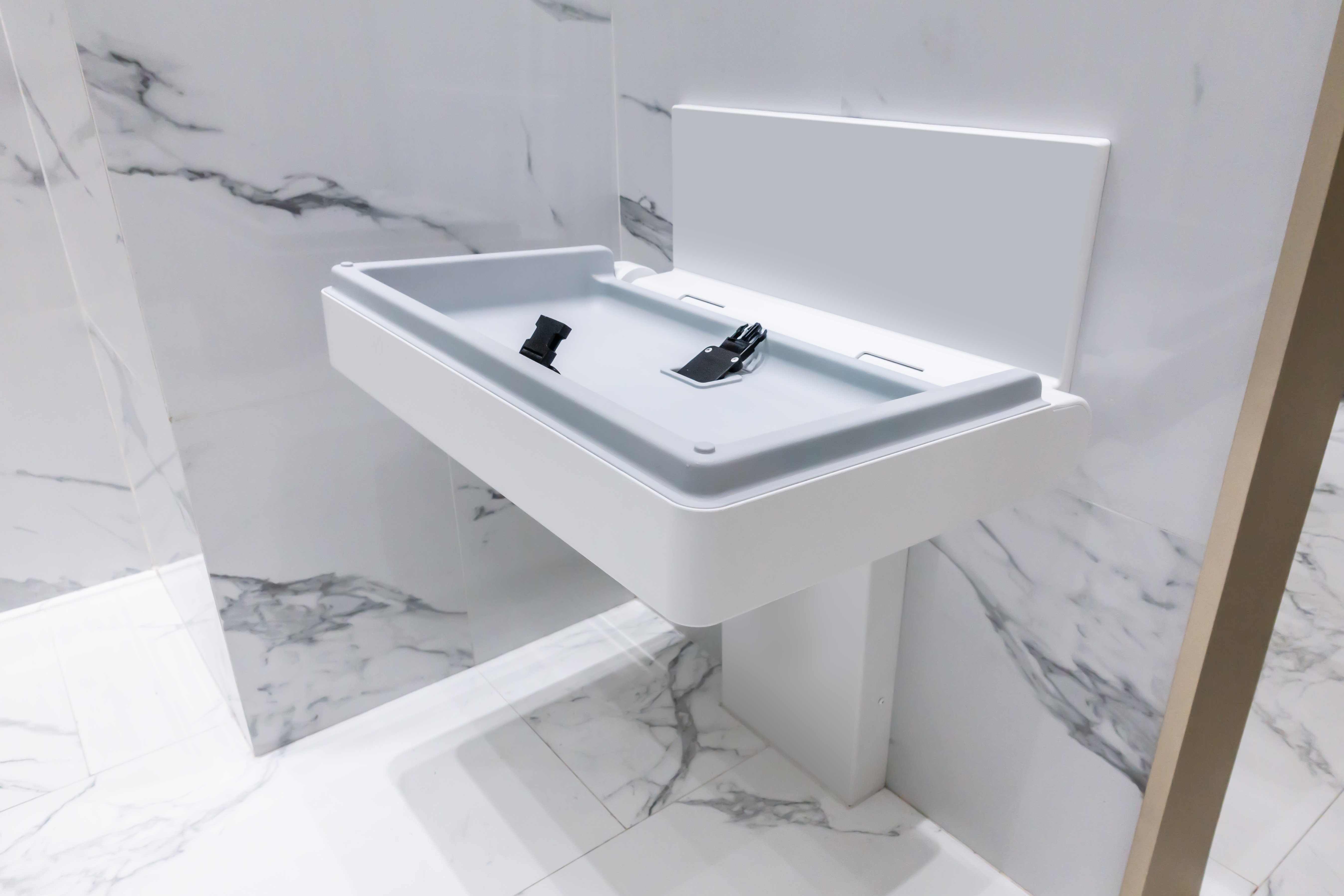
Une table à langer horizontale se replie du mur et s'ouvre vers l'extérieur dans la pièce, reposant à plat lorsqu'elle est utilisée. C'est le format le plus courant et il fonctionne bien dans la plupart des aménagements de toilettes standard. Une table à langer verticale s'ouvre vers le bas à partir d'une position plus élevée sur le mur, ce qui peut être un meilleur choix lorsque l'espace au sol est vraiment limité ou lorsque l'agencement rend une unité horizontale difficile d'accès et d'utilisation confortable.
Les deux fonctionnent bien. Cela dépend vraiment des dimensions de votre espace spécifique et de l'endroit où vous prévoyez d'installer l'unité sur le mur.
Matériaux et qualité de fabrication des tables à langer commerciales
La plupart des tables à langer commerciales utilisent du polyéthylène haute densité (HDPE) pour la surface à langer. Elle est lisse, durable, facile à nettoyer et résiste à la croissance microbienne, ce qui est exactement ce que l'on attend dans des toilettes. La principale différence entre les modèles économiques et haut de gamme est souvent la façon dont cette surface résiste à une utilisation quotidienne intensive au fil des ans.
Une table à langer horizontale se replie du mur et s'ouvre vers l'extérieur dans la pièce, reposant à plat lorsqu'elle est utilisée. C'est le format le plus courant et il fonctionne bien dans la plupart des aménagements de toilettes standard. Une table à langer verticale s'ouvre vers le bas à partir d'une position plus élevée sur le mur, ce qui peut être un meilleur choix lorsque l'espace au sol est vraiment limité ou lorsque l'agencement rend une unité horizontale difficile d'accès et d'utilisation confortable.
Les deux fonctionnent bien. Cela dépend vraiment des dimensions de votre espace spécifique et de l'endroit où vous prévoyez d'installer l'unité sur le mur.
Quand vaut-il la peine de payer plus cher pour une finition premium ?
Les unités plus haut de gamme vont encore plus loin en matière d'hygiène. La table à langer verticale Mediclinics BabyMedi et la table à langer horizontale Mediclinics BabyMedi avec ioniseur intègrent toutes deux un additif antimicrobien Biocote directement dans le matériau de la surface à langer, de sorte qu'il réduit activement la croissance bactérienne plutôt que d'être simplement facile à nettoyer. La version horizontale va encore plus loin avec un ioniseur intégré qui neutralise les virus et les bactéries dans l'air ambiant, testé et approuvé indépendamment par TÜV Rheinland. Pour un lieu comme un centre commercial ou un aéroport, ce type de protection vaut vraiment la peine d'être envisagé.
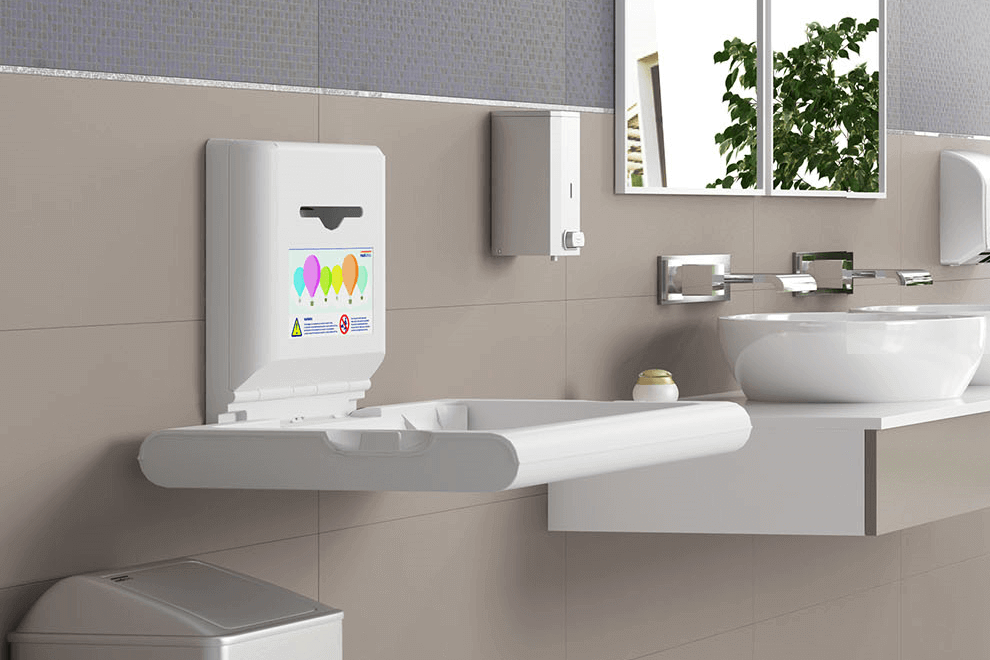
Si l'esthétique extérieure est importante pour votre environnement, l'acier inoxydable est beaucoup plus résistant à un usage intensif et au vandalisme que le plastique standard. La table à langer horizontale encastrée en acier inoxydable Babycare s'intègre parfaitement au mur pour un aspect épuré et est conçue pour faire face aux environnements exigeants. Pour une version verticale avec des caractéristiques similaires, la table à langer verticale encastrée en acier inoxydable Koala Kare KB311 est une excellente option, avec une surface de lit antimicrobienne Microban et un distributeur de revêtements verrouillable qui distribue un revêtement à la fois, réduisant le gaspillage et rendant les recharges beaucoup plus simples.
Normes de sécurité et points à surveiller
Toutes les tables à langer commerciales vendues au Royaume-Uni doivent être conformes à la norme EN 12221, la norme britannique et européenne pour les tables à langer, qui couvre l'intégrité structurelle, les sangles de sécurité, les dimensions de la surface à langer et les exigences de charge. Les unités commerciales sont généralement conçues pour des enfants jusqu'à 3,5 ans et environ 22 à 23 kg, et les modèles de bonne qualité sont testés pour supporter des charges statiques de 50 kg ou plus, bien au-delà de ce que la norme exige strictement.
Éléments à vérifier lors de la comparaison des modèles :
- Conformité à la norme EN 12221, qui doit être clairement indiquée dans les spécifications du produit
- Une sangle ou ceinture de sécurité réglable pour attacher l'enfant
- Pas de bords ou de coins tranchants sur la surface à langer
- Un mécanisme d'ouverture et de fermeture fluide et fiable, idéalement avec un vérin à gaz ou pneumatique pour que l'unité ne tombe pas brusquement
- Une capacité de poids adaptée à la tranche d'âge que vous ciblez, généralement des enfants jusqu'à 3,5 ans et environ 22 à 23 kg
Il est également utile de vérifier la garantie avant d'acheter. Une garantie plus longue est généralement un bon signe que le fabricant est confiant dans la qualité de fabrication et cela vous offre une certaine tranquillité d'esprit en cas de problème ultérieur. De plus, en guise de rappel final, quelle que soit la qualité de l'unité, les bébés ne doivent jamais être laissés sans surveillance sur une table à langer.
Quel type de table à langer pour quel environnement
Tous les lieux n'ont pas besoin du même niveau d'équipement. Voici une façon simple de l'envisager.
Environnements à faible fréquentation
Pour les lieux plus petits ou plus calmes comme les bureaux, les cafés ou les restaurants indépendants, une unité fiable de milieu de gamme fera parfaitement l'affaire. La table à langer horizontale Dolphin BC100EH est un choix solide ici. Elle est durable, simple à installer et conforme aux normes de sécurité ASTM, ce qui en fait une option sensée et sans tracas pour les environnements qui n'ont pas besoin d'une spécification commerciale robuste.
Environnements à fréquentation moyenne à élevée
Pour les lieux plus fréquentés comme les centres de loisirs, les hôtels et les grands restaurants, vous voudrez quelque chose de plus robuste. La table à langer pliable Babycare Plus convient parfaitement ici. Elle est facile à utiliser d'une seule main grâce à son mécanisme à vérin à gaz, n'a pas de bords tranchants, comprend un rangement intégré pour les revêtements et utilise du HDPE qui inhibe activement la croissance bactérienne.
Environnements à très haute fréquentation
Pour des lieux comme un centre commercial, un aéroport ou une gare, il est vraiment utile d'investir dans une unité haut de gamme conçue pour supporter une utilisation quotidienne continue. La gamme Mediclinics BabyMedi est un excellent point de départ, avec des surfaces antimicrobiennes, des couvercles en acier inoxydable résistants au vandalisme, des distributeurs de revêtements verrouillables et des mécanismes d'ouverture pneumatiques. Si vous voulez quelque chose avec un peu plus de présence au mur, la table à langer horizontale en acier inoxydable Koala Kare KB310 mérite un examen sérieux. Elle dispose d'une protection antimicrobienne Microban intégrée en permanence dans la surface du lit, d'une charnière acier sur acier pour une durabilité accrue, d'un double distributeur de revêtements verrouillable et d'un extérieur en acier inoxydable 304 monobloc sans soudure. Elle est également disponible dans différentes finitions pour s'adapter à l'esthétique de vos toilettes.
Installations Premium et phares
Pour les lieux où seul le meilleur est suffisant, la table à langer encastrée en acier inoxydable Dolphin BC100SS-R est ce qu'il y a de plus haut de gamme. Elle est construite en acier inoxydable brossé type 304 de calibre 16, s'encastre parfaitement dans le mur pour une finition épurée et haut de gamme, et utilise un vérin pneumatique dissimulé pour que l'unité s'ouvre et se ferme en douceur d'une seule main, utile lorsque vous tenez déjà votre bébé de l'autre. Elle se situe dans le haut de gamme des prix, mais pour le bon environnement, elle est impressionnante.
Revêtements hygiéniques et entretien quotidien
Un aspect souvent négligé au moment de l'achat est la manière dont l'unité sera entretenue au quotidien. De nombreuses tables à langer haut de gamme incluent un distributeur de revêtements de lit verrouillable, qui contient des revêtements en papier jetables pour la surface à langer. Ceux-ci permettent aux utilisateurs de placer un nouveau revêtement avant utilisation, ce qui est beaucoup plus hygiénique que de se fier uniquement à la propreté de la surface entre les utilisations.
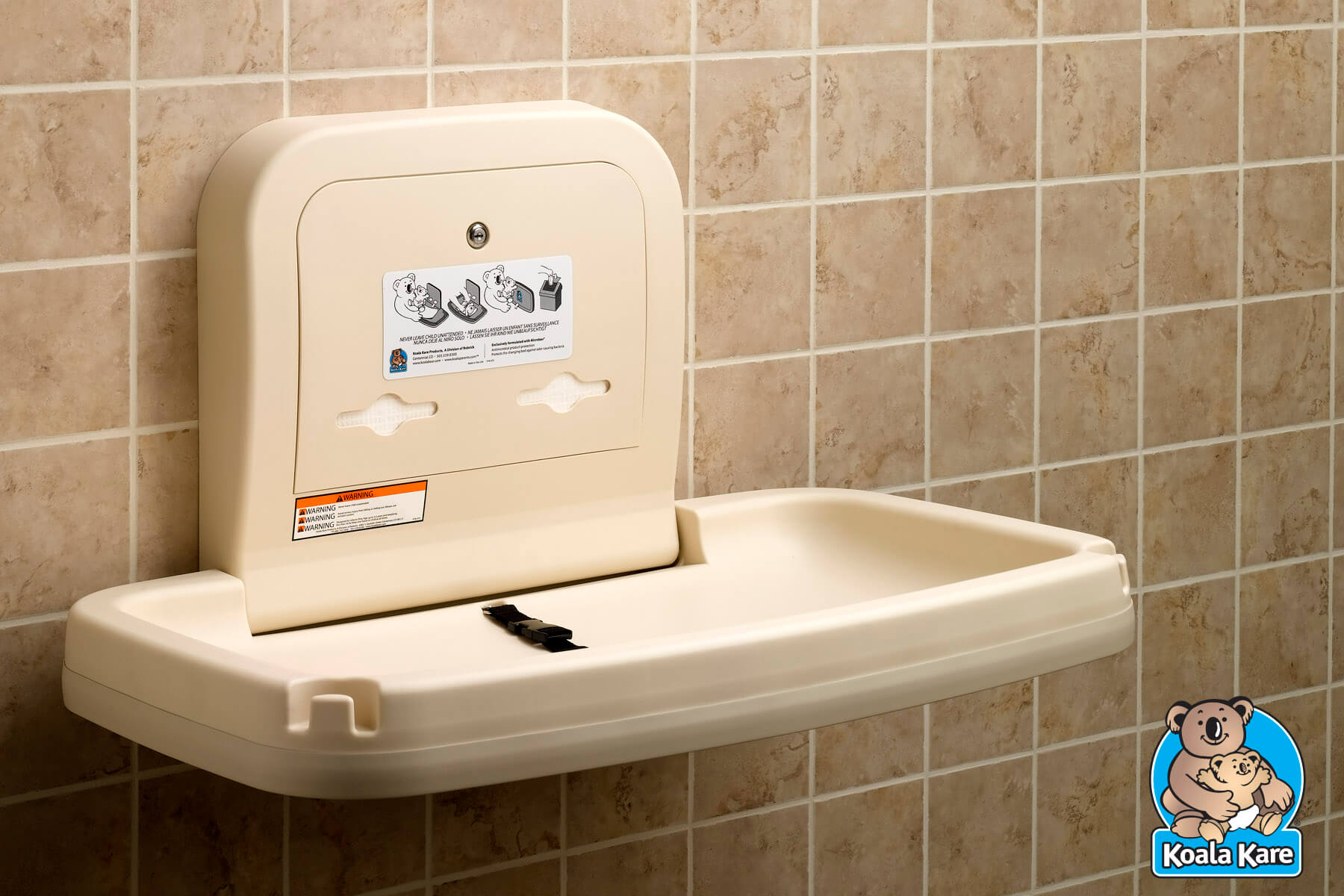
Si l'hygiène est une priorité pour votre établissement (et dans des toilettes publiques, elle devrait l'être), il est utile de choisir une unité qui prend en charge cet aspect et de prendre en compte le coût des revêtements dans votre décision. Les unités avec distributeurs verrouillables contribuent également à réduire les abus et le gaspillage, ce qui peut s'accumuler rapidement dans un établissement très fréquenté.
La loi vous oblige-t-elle à fournir une table à langer ?
Ce n'est pas une exigence légale stricte au Royaume-Uni, mais c'est fortement recommandé. La British Toilet Association conseille au moins un espace de change unisexe pour 10 000 personnes utilisant une zone, ou des unités fournies dans les toilettes pour hommes et femmes.
Bien qu'il n'y ait pas de mandat légal généralisé, le document M des règlements de construction approuvés exige que les nouveaux bâtiments non résidentiels et les rénovations majeures prennent en compte les installations accessibles, et la loi sur l'égalité de 2010 exige que les entreprises apportent des aménagements raisonnables pour garantir l'accès à tous les utilisateurs. En pratique, pour toute entreprise qui accueille des familles, l'absence d'une installation de change est perceptible et peut facilement décourager les clients de revenir.
Choisir la bonne table à langer dépend vraiment de votre environnement. La qualité de fabrication, les matériaux, les caractéristiques d'hygiène et la façon dont l'unité gère une utilisation intensive au fil du temps jouent tous un rôle, et obtenir le bon équilibre dès le départ signifie moins d'entretien, moins de remplacements et une meilleure expérience pour tous ceux qui utilisent vos toilettes. Pour les environnements plus calmes, une unité de milieu de gamme solide fera l'affaire, mais pour les environnements plus fréquentés et ouverts au public, il vaut la peine de dépenser plus pour quelque chose avec des surfaces antimicrobiennes, un mécanisme d'ouverture fiable et des fonctionnalités qui favorisent l'entretien hygiénique quotidien.
Si vous souhaitez discuter de vos besoins, nous sommes là pour vous aider. Jetez un œil à notre gamme complète de tables à langer commerciales ou contactez notre équipe dès aujourd'hui.

01143540047
02033270448