Most facilities managers have a rough sense that a neglected washroom costs money. Fewer have broken down exactly where those costs come from. The obvious one is the repair bill when something stops working but that's only one of six categories of cost that build up when a washroom is under-maintained and it's not even the most expensive. Here's what that looks like in practice.
1. Poor Maintenance Can Void Your Warranty
This one catches businesses off guard more than any other. Most hand dryer warranties include a clause that faults caused by lack of routine maintenance will not be covered. Our hand dryer maintenance guidehand dryer maintenance guide makes this explicit: poor operating conditions or failure to service a unit regularly removes warranty protection.
In practice, this means a motor that burns out because a HEPA filter was never changed is not a warranty claim. It's a full replacement cost. For a quality commercial hand dryer, that's anywhere from £250 to over £1,000 for the unit alone, plus installation. If the same maintenance oversight applies across multiple units on the same site, the financial exposure multiplies accordingly. The warranty is only as good as the maintenance routine behind it.
2. A Shorter Equipment Lifespan and Unplanned Replacements
A quality commercial hand dryer is designed to last a decade or more. The Mitsubishi Jet Towel Smart Wave u02 has an exceptional motor lifespan and a decade long warranty to back it up. The Dryflow BulletDri Plus brushless variant offers 5,000 hours of continuous motor operation. These figures assume the unit is maintained. Without it, a dryer that should serve a washroom for ten years may need replacing in five and the full cost of a new unit plus installation falls on the facilities budget as an unplanned expense.
Motor brushes wear down over time and should be replaced when they fall below 5mm. Dust accumulation on electronic components creates heat and increases failure risk. A dirty drain tray in a blade-style dryer creates back-pressure that strains the motor. None of these are catastrophic individually, but combined and left unaddressed, they shorten the life of an expensive piece of equipment significantly.
3. Emergency Repair Costs That Planned Maintenance Would Have Avoided
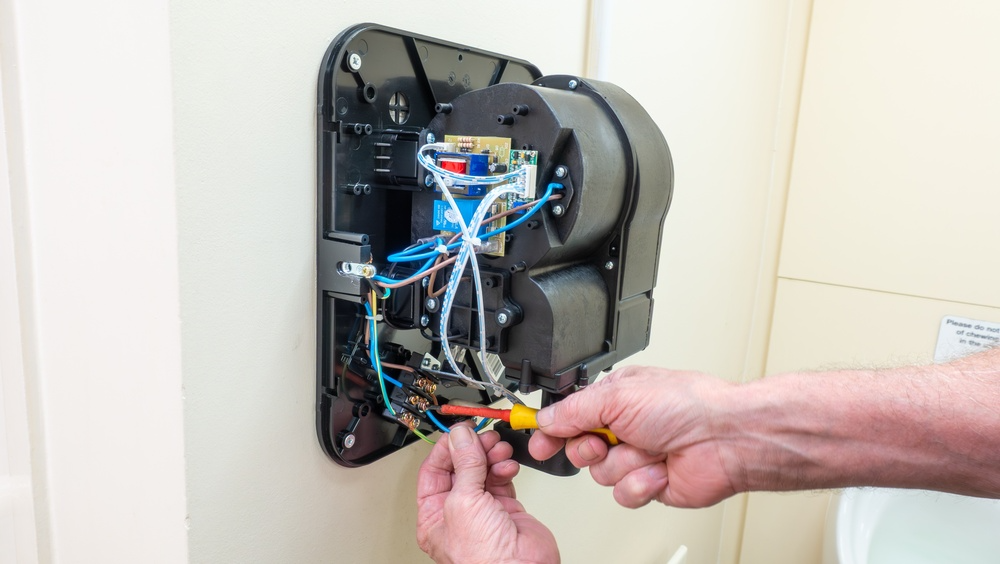
The difference between planned maintenance and an emergency repair is not just the cost of the fix. It's the cost of an unplanned callout, parts sourced at short notice, engineer time at reactive rates and a washroom out of service during a period that wasn't scheduled for downtime. In a busy venue, a broken hand dryer in the middle of a service period is an operational problem as well as a maintenance one.
Planned hand dryer maintenance removes most of the conditions that lead to emergency failures. Keeping filters on schedule, sensors clean, motor brushes within spec and components inspected removes the variables that cause unplanned breakdowns. The cost of routine servicing is predictable, manageable and a fraction of what an unplanned breakdown costs when it happens at the worst time. Dryflow's lifetime repair guarantee is relevant here: for businesses that want to remove the repair cost variable entirely, specifying a Dryflow unit means any fault is fixed free of charge for the life of the product.
4. Hygiene Failures and the Cost of Infection Spreading
A HEPA filter in a hand dryer doesn't just protect the person using it. In a busy washroom, a high-speed dryer passing thousands of dries a day is also moving a significant volume of washroom air through its filtration system and returning cleaner air to the room. A filter that hasn't been changed on schedule is no longer performing that function properly. In healthcare settings, the link between washroom hygiene standards and infection risk is direct and well-documented. In offices and commercial venues, the link between washroom hygiene and staff illness is more diffuse but still real.
Research from NHS England shows that healthcare-associated infections affect hundreds of thousands of patients each year and that hand hygiene is one of the most effective tools available to reduce transmission. In a commercial context, the equivalent figure is staff sick days. According to the CIPD Health and Wellbeing at Work report, UK employees averaged 9.4 sick days per year in 2025, the highest level in over a decade. The government-commissioned Keep Britain Working report estimates each sick day costs a business around £120 in lost profits once salary, lost productivity and cover are factored in. A washroom that contributes to infection spreading through a team isn't a hygiene problem in isolation. It's a staffing cost.
For HEPA filter maintenance schedules specific to usage levels, our guide on how often hand dryer filters should be changed breaks that down. In high-traffic environments, monthly inspection is recommended.
5. The Reputation Cost of a Washroom That Lets the Business Down
The psychologist Daniel Kahneman's peak-end rule describes how people remember experiences: not as an average across the whole thing, but shaped disproportionately by the most intense moment and the final moment. In a restaurant, hotel, or leisure venue, the washroom visit often comes at or near the end of the experience. A washroom that falls short in that moment affects how the whole visit is remembered, regardless of how good everything else was.
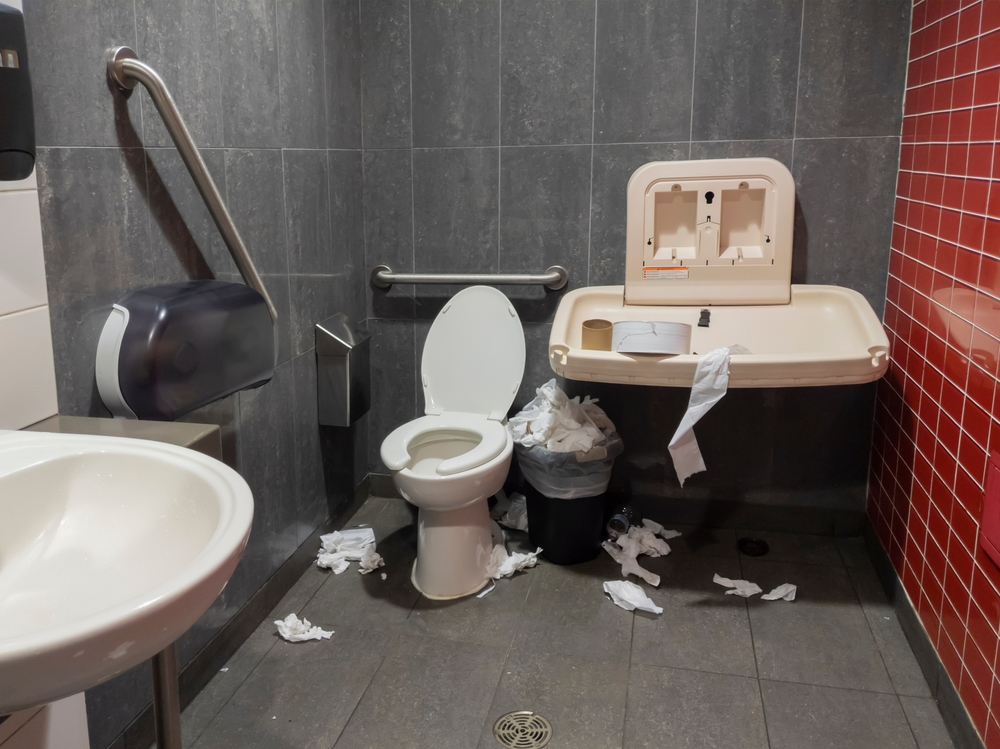
Research in hospitality consistently shows that washroom quality has an outsized effect on overall customer satisfaction. Research analysing TripAdvisor review data consistently identifies cleanliness as one of the most significant factors in guest ratings, with a direct impact on a property's ability to charge higher rates and maintain occupancy and washrooms. A commercial hand dryer that sounds wrong, takes twice as long as it should due to a degraded motor, or has visible grime on the casing is a visible signal about the standards of the business behind it. That signal is disproportionately damaging. What a well-designed and well-maintained washroom does for a business is the other side of this: the reputational benefit of getting it right is just as real as the cost of getting it wrong.
6. Running Costs That Nobody Has Ever Reviewed
A commercial washroom that was specified five or ten years ago may be running equipment that was industry leading then but isn't now. An old warm-air hand dryer uses between 20 and 30 watt-hours per dry. A modern high-speed unit uses between 2 and 5. At 300 daily uses, that difference costs around £200 per unit per year in electricity. Across a site with multiple washrooms, that ongoing overspend is entirely avoidable and compounds every year the equipment isn't reviewed.
Maintenance and specification review are two sides of the same coin. A unit that is being properly maintained but was never the right choice for the usage level is still a cost that could be eliminated. The businesses that control washroom running costs are the ones that review what's installed periodically, not just when something breaks.
What a Good Washroom Maintenance Routine Looks Like
A proper commercial washroom maintenance routine isn't complicated. It's largely a matter of scheduling.
Filter Maintenance
HEPA filters in hand dryers should be inspected at least four times a year in light to moderate traffic environments. In high-traffic settings, monthly inspection is the correct schedule. When a filter shows visible build-up of lint, dust, or debris, it needs replacing. For most hand dryers in average use, this means a replacement roughly once a year. Using the correct replacement filter for each specific model matters as a filter that doesn't seat correctly won't provide the seal needed for full filtration performance.
External Cleaning and Sensors
The outer casing of a hand dryer should be wiped down with a damp cloth and neutral detergent as part of the regular washroom cleaning schedule. The infrared sensor visor needs particular attention, as a dirty sensor triggers inconsistently and can mean the dryer either fails to activate or runs longer than it should. The drain tray in blade-style dryers should be emptied and cleaned every one to two weeks depending on usage. Our maintenance advice is worth bookmarking for facilities staff.
When Maintenance Alone Is Not Enough
Sometimes a unit has simply reached the end of its practical life, or was never the right specification for the level of use it's been subject to. A hand dryer running at 150% of its recommended daily use capacity isn't a maintenance problem. It's a specification problem. Matching the right dryer to the environment is the most effective maintenance decision available and the full commercial hand dryer range covers every usage level from compact office units to high-speed models built for airports and stadiums.
The Hand Dryers That Reduce Your Maintenance Burden
Not all hand dryers require the same level of ongoing attention. These are the products that are specifically engineered to reduce the maintenance burden.
Dryflow Range
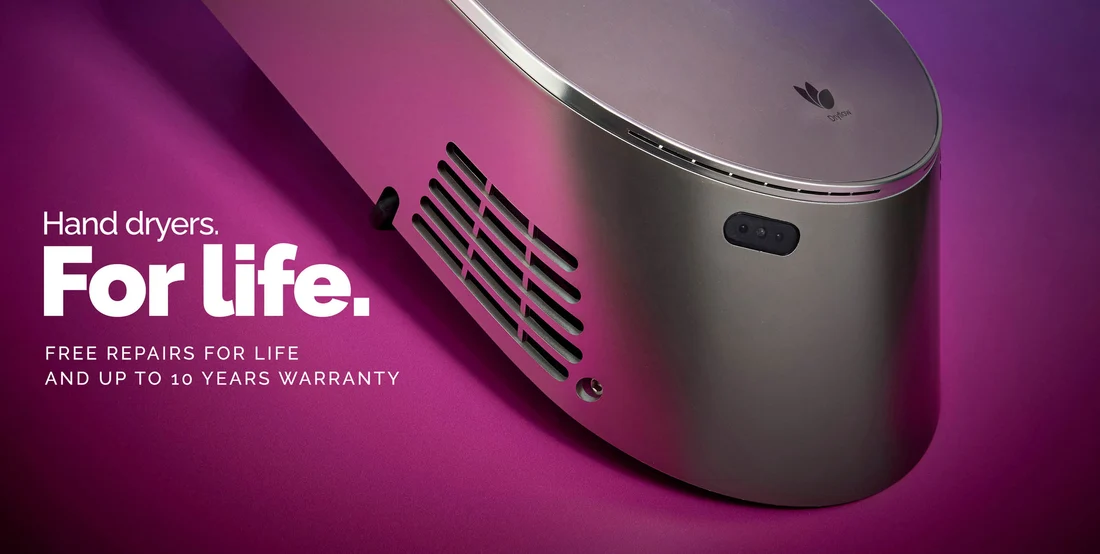
Every dryer in the Dryflow range is backed by a lifetime repair guarantee. If a unit develops a fault at any point in its life, Dryflow repairs it free of charge, covering parts, labour and return delivery. The philosophy behind this is straightforward: the most sustainable product is the one that stays in service rather than going to landfill. For businesses that want to remove the emergency repair cost from the equation entirely, the Dryflow range is the most direct answer available. The Dryflow Infinity pairs this with a brushless motor, HEPA filtration and maintenance diagnostics that flag when servicing is needed before a fault develops.
Mitsubishi Jet Towel Wave u02
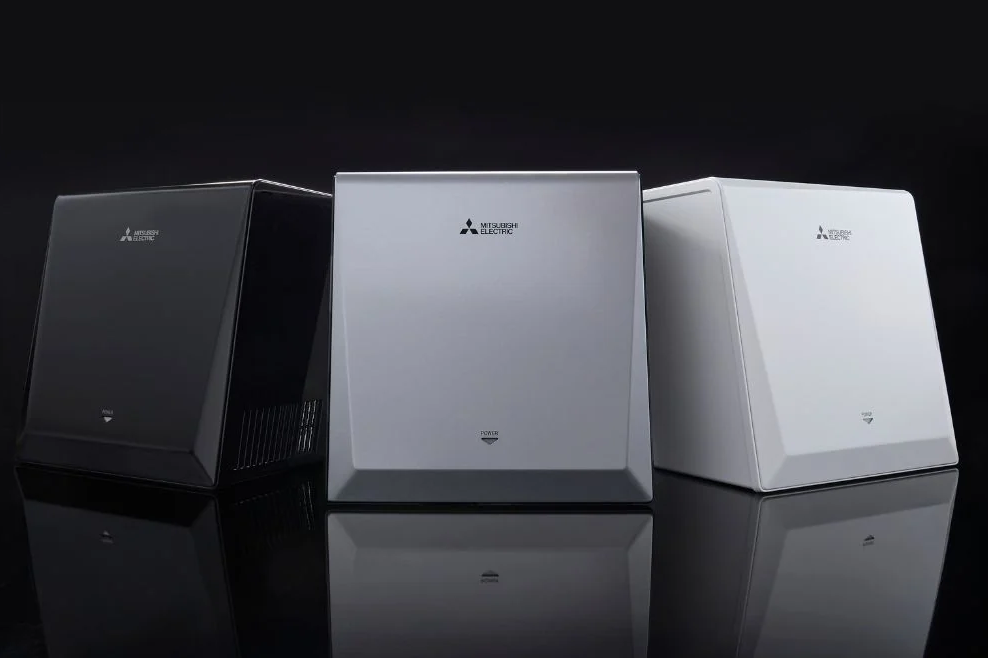
The Mitsubishi Jet Towel Smart Wave u02 is as close to maintenance-free as a commercial hand dryer gets. The EcoSmart™ motor has been specifically developed for reliability. It is one of the fastest, quietest and most reliable hand dryers on the market, which is why we give it an extended 10 year warranty. For any business that wants a commercial hand dryer they don't need to think about, the Jet Towel Smart is the obvious specification.
The cost of a poorly maintained commercial washroom shows up in six places: higher energy bills from degraded equipment, shortened product lifespan, unplanned emergency repairs, hygiene-related costs from failing filtration, reputational damage at the moment that matters most and ongoing waste from neglected taps and dispensers. All of them are manageable with the right equipment specified from the outset and a consistent maintenance schedule in place.
To talk through the right hand dryer or washroom setup for your building, talk to our team today on 0114 354 0047 or get in touch online and we'll work out what makes sense for your space and usage level.

01143540047
02033270448