

Most people don't give much thought to the taps in a commercial washroom until something goes wrong. A tap left running, a hygiene complaint, a water bill that's crept up without explanation. But the reality is that tap choice has a significant impact on how a washroom functions, how hygienic it is and how much water and money a business uses every day. Whether you're fitting out a new space or replacing ageing fixtures, this guide covers everything you need to know about commercial taps, from the different types available to which one suits your environment best.
Why Commercial Tap Choice Has a Bigger Impact Than You'd Expect
A commercial washroom tap isn't just a functional fitting. It's one of the most frequently used pieces of hardware in any building and the type you choose affects hygiene standards, water consumption, maintenance demands and compliance with building regulations. Get it right and the tap works quietly in the background doing exactly what it should. Get it wrong and you end up with dripping taps, cross-contamination risks and ongoing costs that could easily have been avoided.
The good news is that the commercial tap market has improved significantly in recent years. Modern options are more water-efficient, more hygienic, and more straightforward to specify than ever before. There’s also a type to suit every environment, from a small office to a high-traffic hospital.
The Main Types of Commercial Taps and When to Use Each One
Understanding the different types of commercial tap is the logical starting point before specifying anything. The three main categories you'll come across are sensor taps, time flow taps and mixer taps and each one is suited to different environments and priorities.
Sensor Taps
Sensor taps are touchless, automatic units that activate when hands are placed beneath the spout and shut off when they're removed. They're the most hygienic option available and have become a popular choice across healthcare, hospitality, offices and public buildings. The AQUAZONE AQUAECO Mono Sensor Tap is a good example of a WRAS-approved deck-mounted sensor tap that covers all the essentials, with the flexibility of battery or mains operation to suit different installation setups.
Time Flow Taps
Time flow taps, also known as non-concussive or push taps, operate via a push button that releases water for a fixed period before the tap closes automatically. They're robust, simple to use and well suited to high-footfall environments where vandal resistance and water saving are priorities.
Mixer Taps
Mixer taps, including time flow mixer variants, combine hot and cold water control in a single unit and are available in both sensor and push-button formats depending on the requirements of the space.
Each type has a clear use case and the sections below break down what matters most for each one.
How Sensor Taps Work and Why They've Become the Go-To for Commercial Washrooms
A sensor tap uses an infrared sensor built into the spout or body of the unit to detect the presence of hands. When the sensor registers an obstruction, it opens a solenoid valve inside the tap, allowing water to flow. When the hands are removed, the valve closes and the water stops. The whole process happens in a fraction of a second and requires no physical contact at any point.
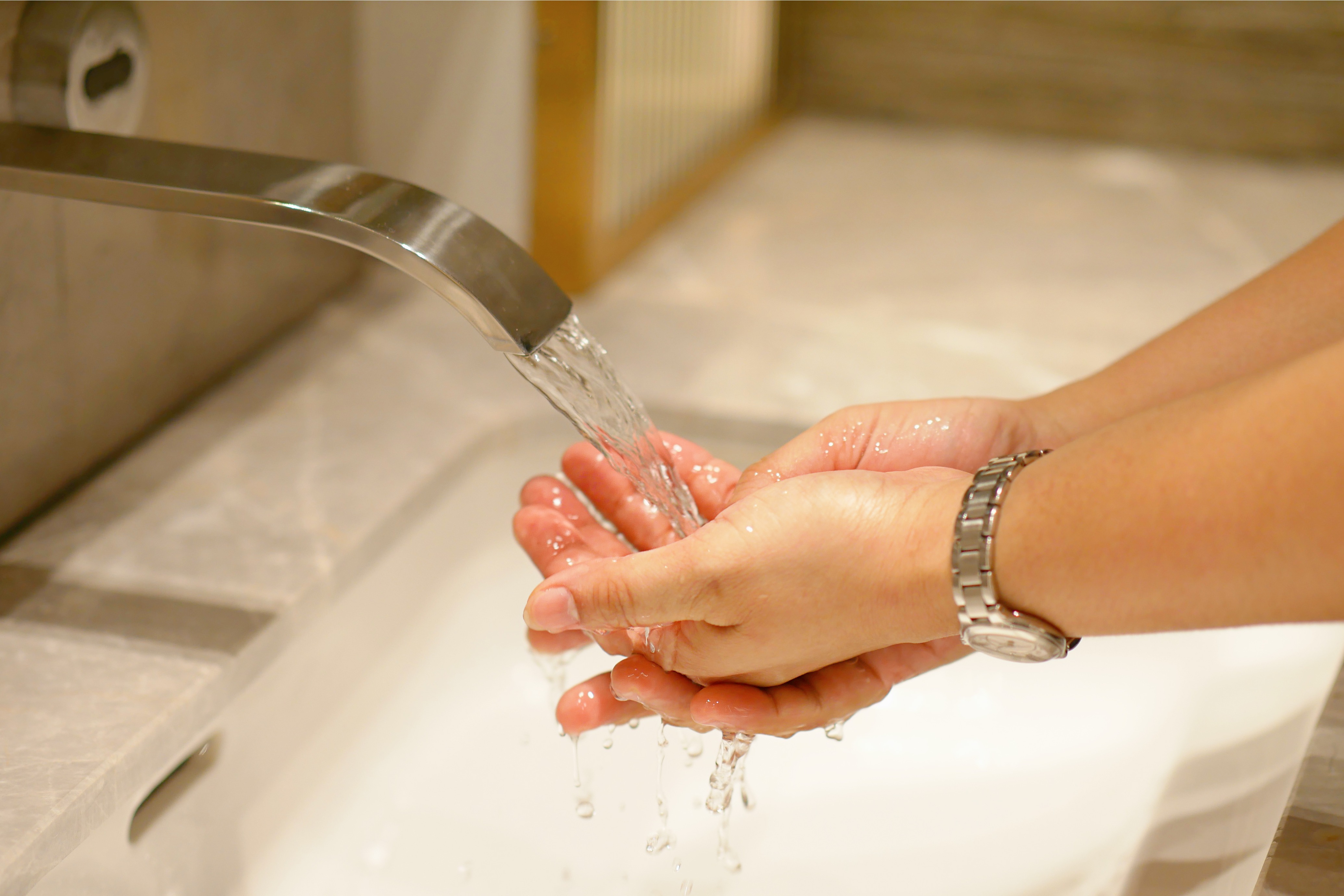
Most sensor taps can be powered either by batteries or by a mains connection and the choice between the two usually comes down to the infrastructure of the space. Battery-powered units are more flexible to install and don't require an electrical supply near the sink, while mains-powered units eliminate the need for battery replacement over time. Many models also include a remote control function that allows settings like flow rate, sensor detection distance and time limits to be adjusted without tools, which is a useful feature in environments where water usage needs to be carefully managed.
Time Flow Taps and Non-Concussive Taps Explained
Time flow taps work on a different but equally effective principle. Rather than using a sensor, these taps are activated by pressing a button or soft-touch pad on the top or front of the fitting. Once pressed, water flows for a pre-set period, typically around seven seconds, before the tap automatically closes. The user gets the water they need and the tap turns off on its own.
DELABIE is one of the most well-regarded names in commercial washroom hardware and their time flow range reflects that reputation. The DELABIE TEMPOSOFT 2 is a deck-mounted push tap with a soft-touch button, a seven-second flow and a scale-resistant aerator that keeps the fitting looking clean over time. It's a practical, no-fuss option that delivers up to 85% water savings compared to a standard manual tap. For spaces where temperature control at the point of use is also a requirement, the DELABIE TEMPOMIX 2 builds on the same platform with a built-in mixer function and an adjustable maximum temperature limiter. Both carry a 30-year warranty, which gives a clear indication of how DELABIE approach build quality.
The Water Saving Case for Commercial Taps
The numbers around water consumption in commercial washrooms are striking and they make a compelling case for moving away from standard manual taps. A conventional tap runs at an average of 10 to 15 litres per minute and relies entirely on the user to turn it off. A sensor tap or time flow tap, by contrast, typically runs at 3 to 6 litres per minute and closes automatically. The difference adds up very quickly in a busy building.
To put it in concrete terms, a small office of just seven people could save over 12,000 litres of water per year by switching to automatic taps. For larger buildings, hospitals, schools, or any site with significant washroom footfall, the savings are proportionally larger. Beyond the environmental benefit, this translates directly into lower water bills, which means the upfront investment in better taps pays for itself over time. For a closer look at the numbers and a balanced view of what sensor taps do well and where they have limitations, our guide on sensor tap advantages and disadvantages is worth a read.
Why Touchless Taps Make a Difference to Washroom Hygiene
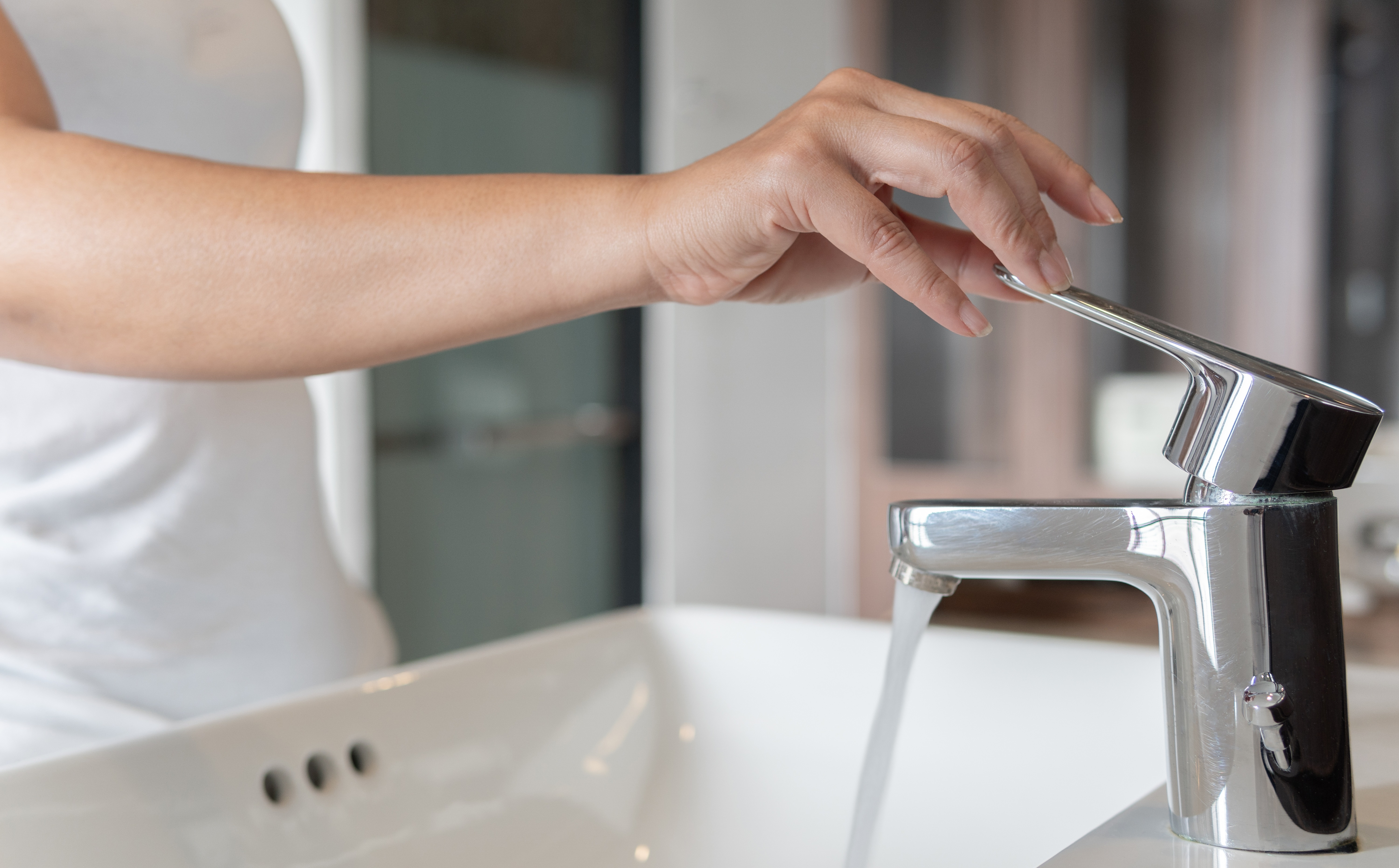
In any commercial setting, the handwashing station is one of the highest-contact surfaces in the building. Every person who uses a manual tap touches it with unwashed hands on the way in and potentially clean hands on the way out, which creates a direct route for bacteria to transfer between users. In environments where hygiene standards are critical, this is a problem that touchless taps solve completely.
Sensor taps eliminate hand contact entirely, which removes the risk of cross-contamination at the tap itself. From a compliance perspective, Approved Document M requires that washroom fittings are easily operated by all users and sensor taps satisfy this requirement without compromise
WRAS Approval and Why It Should Be on Your Checklist
WRAS stands for the Water Regulations Approval Scheme, and while WRAS approval itself isn't a legal requirement, compliance with the Water Supply (Water Fittings) Regulations 1999 is. Every water fitting installed in a commercial building must meet these regulations, which govern the design and installation of fittings to prevent waste, contamination, and misuse of the public water supply. WRAS approval is the most recognised and straightforward way of demonstrating that compliance, which is why it's widely specified and expected across commercial projects in the UK. If you're unsure whether a product you're considering is approved, the WRAS website has a free searchable directory where you can check any fitting before you buy.
Fitting a tap that isn't WRAS-approved in a commercial setting can leave a business non-compliant with water regulations and in some cases can cause problems during building inspections or affect insurance. It's one of those things that's easy to overlook when comparing products on price or aesthetics, but it matters far more in practice. We've covered what WRAS approval means for sensor taps and what to look for when checking a product's credentials in more detail and it's worth a read before committing to any commercial tap purchase.
Automatic Hygiene Flush and Why It Matters for Legionella Prevention
Legionella management is a legal requirement for all commercial premises in the UK under HSE ACoP L8, which requires businesses to assess and control the risk of Legionella bacteria in their water systems. One of the key control measures outlined by the HSE is flushing infrequently used outlets regularly to prevent stagnation in the pipework. This is where the automatic hygiene flush function on certain sensor taps becomes very useful.
The automatic hygiene flush is a timed flush built into the tap that activates automatically, typically once every 24 hours after the last use, running water through the system for a short period to keep the pipework clear. It's not a replacement for a full Legionella risk assessment or management plan, but it is a practical tool that helps buildings meet their obligations automatically rather than relying on manual processes. This matters most in buildings where certain washrooms are used infrequently, such as schools during holidays, unoccupied hospital rooms, or seasonal hospitality venues where outlets can sit unused for extended periods. The DELABIE BINOPTIC Electronic Tap includes this function as standard, with an adjustable duty flush pre-set to run for approximately 60 seconds every 24 hours after last use. For facilities managers specifying taps in buildings with a formal Legionella control plan, it's a feature worth prioritising.
Choosing the Right Commercial Tap for Your Environment
Different environments have different priorities when it comes to tap specification and the right choice varies considerably depending on the sector.
The Best Taps for Healthcare and Clinical Washrooms
Healthcare washrooms have some of the most demanding tap requirements of any environment. Touchless operation, WRAS approval, automatic hygiene flush capability and materials that can withstand frequent deep cleaning are all non-negotiable. Sensor taps with infrared detection and anti-blocking features are the standard choice here and models with disposable spout options add an extra layer of infection control for the most clinical areas.
The Best Commercial Taps for Schools and Educational Buildings
Time flow taps are the go-to choice for schools and educational settings. Their simplicity, vandal resistance and water-saving performance make them well suited to environments with younger users and the self-closing mechanism is particularly valuable where taps being left running is a regular problem.
Choosing the Right Tap for Office and Workplace Washrooms
Office washrooms can work well with either sensor or time flow taps depending on budget and preference. Sensor taps give a more contemporary feel and are increasingly expected in modern commercial fit-outs, while time flow taps offer a reliable, low-maintenance alternative that still delivers strong water-saving performance.
The Best Taps for Hotels and Hospitality Washrooms
Hospitality washrooms tend to prioritise appearance alongside performance. Sensor taps in polished chrome or black finishes work well here, providing a clean, considered look without compromising on hygiene or water efficiency. In guest-facing spaces, the finish and feel of the tap contributes to the overall impression of the washroom.
Commercial Taps for Public Buildings and Leisure Facilities
High-footfall public environments need robust, durable fittings that can handle sustained use day in and day out. Time flow taps with tamper-resistant mechanisms and heavy-duty construction are well suited to these spaces, where reliability and low maintenance matter as much as performance.
Whatever the environment, the principles are the same: match the tap type to the usage pattern, prioritise WRAS approval and think about water efficiency and long-term maintenance from the outset. Getting the specification right at the start saves a significant amount of time and cost further down the line.
Mounting Options and What They Mean for Installation
Commercial taps come in several mounting configurations and it's worth knowing the difference before you start specifying.
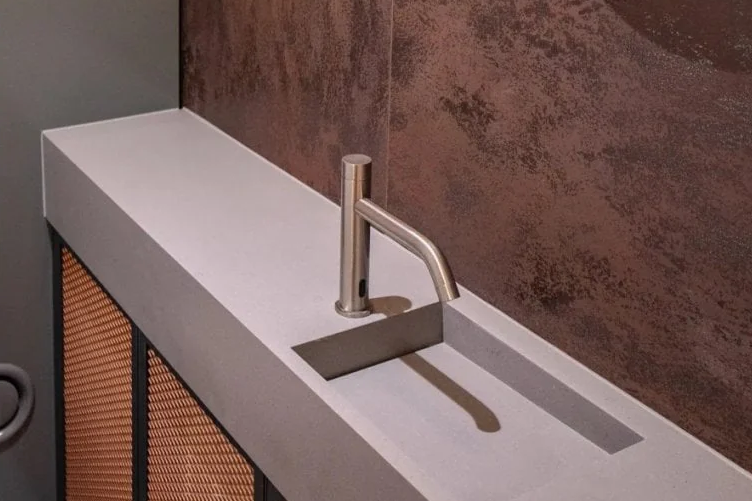
Deck-mounted taps are the most common option in commercial washrooms. They sit directly on top of the basin, are straightforward to install and work with most standard sink setups. If you're not sure which mounting type you need, this is usually the default starting point.
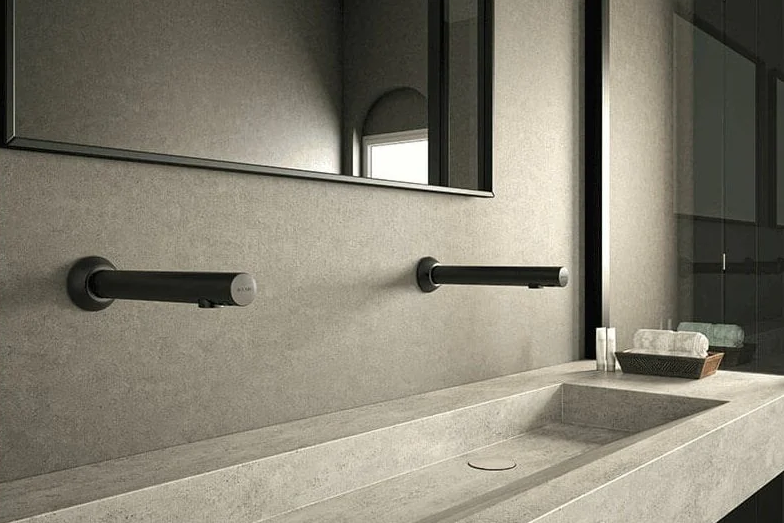
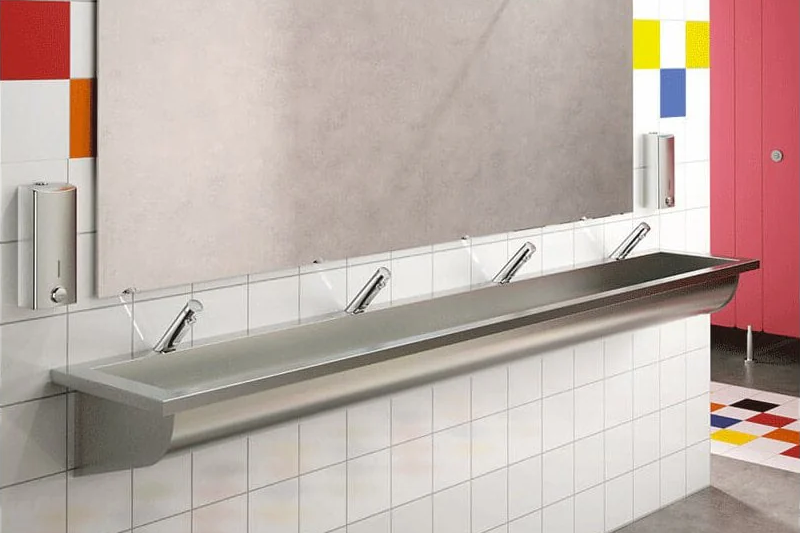
Wall-mounted taps are fixed to the wall above the basin rather than to the basin itself. This frees up the sink area completely, making it easier to clean and maintain. They work particularly well with trough-style washbasins in high-traffic environments like schools, shopping centres and public buildings.
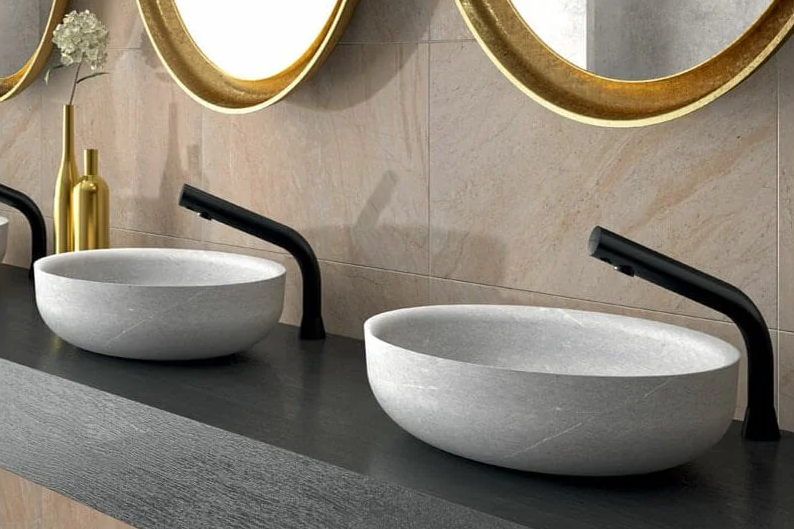
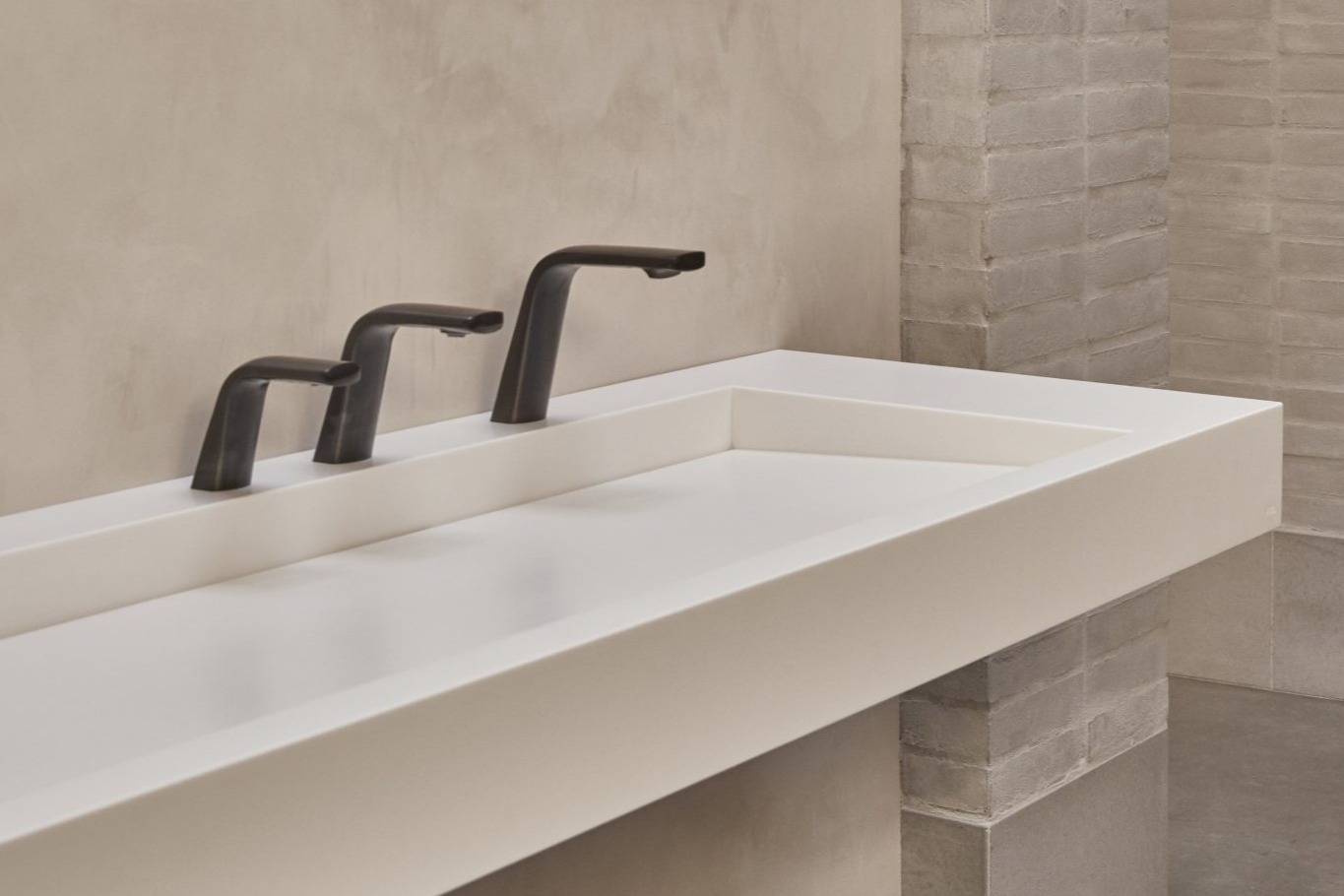
Semi-recessed taps are built into the basin surround so the tap body sits flush with the surface. This gives a much cleaner, more integrated finish and tends to be specified in higher-end commercial fit-outs where the appearance of the washroom is part of the brief.
Each mounting type is available across both sensor and time flow options, so the configuration you need doesn't limit your choice of tap type. The full water control range covers all three mounting configurations if you want to compare options side by side.
Commercial tap choice shapes the hygiene, efficiency and day-to-day running of a washroom long after installation. Whether you need sensor taps for a fully touchless, hygienic solution, time flow taps for a robust and water-efficient option in a high-footfall space, or a mixer tap that combines both, getting the specification right from the start saves time, money and maintenance headaches further down the line. WRAS approval, automatic hygiene flush, water flow rates and mounting configuration are all worth working through before committing to a product.
If you'd like help choosing the right commercial tap for your washroom, the team at Intelligent Hand Dryers is happy to advise. Browse the full sensor taps range and time flow taps range to explore the options, or get in touch and we'll help you find the right fit for your space.

01143540047
02033270448