

Hand hygiene in schools matters more than most people give it credit for. It reduces the spread of illness, keeps children in the classroom and supports a cleaner environment for everyone on site. Yet, walk into most school washrooms and you'll find hand dryers that are too loud, too slow, or simply not built for the environment they're in. Choosing the right hand dryer for a school isn't the same as choosing one for an office or a hotel. There are specific demands around noise, durability, energy efficiency and inclusion that need to be worked through before anything gets ordered. This guide covers all of it.
Why School Hand Dryers Need More Thought Than Most
Schools are unique environments. They're high-footfall, high-energy and home to a hugely varied range of users, from five-year-olds in reception to seventeen-year-olds in sixth form. A hand dryer that works perfectly in a busy office can be completely wrong for a primary school corridor and what suits a secondary school main block may not be appropriate for a special educational needs unit.
The considerations that matter most in schools are noise levels, energy costs, durability, dry time and accessibility. None of these exist in isolation either. A dryer that's very quiet might be too slow, causing queues and wet hands on the way back to class. A dryer that's very fast might be too loud for younger pupils or those with sensory sensitivities. Getting the balance right requires a clear understanding of the specific environment and the people using it and that's what this guide works through.
Why Noise Is One of the Most Important Factors in a School Hand Dryer
Noise is one of the most critical factors in any school hand dryer decision and it's easy to underestimate until you've experienced a loud dryer reverberating off tiled walls into an adjacent classroom. Schools are already busy, stimulating places. Bells ring, corridors echo and children have varying levels of tolerance to additional sensory input. A hand dryer that adds significantly to that noise load is a real problem.
For younger children, and those with autism or sensory processing differences, loud hand dryers can be distressing. Some children will avoid drying their hands entirely rather than use a dryer that overwhelms them, which undermines hand hygiene across the whole school. This is why noise level needs to be treated as a primary specification criterion, not an afterthought. Adjustable hand dryers are particularly well suited to school environments for this reason, as they allow a single model to be installed throughout the building with different speed and noise settings applied depending on the location.
How Much Water Does a Commercial Washroom Waste?
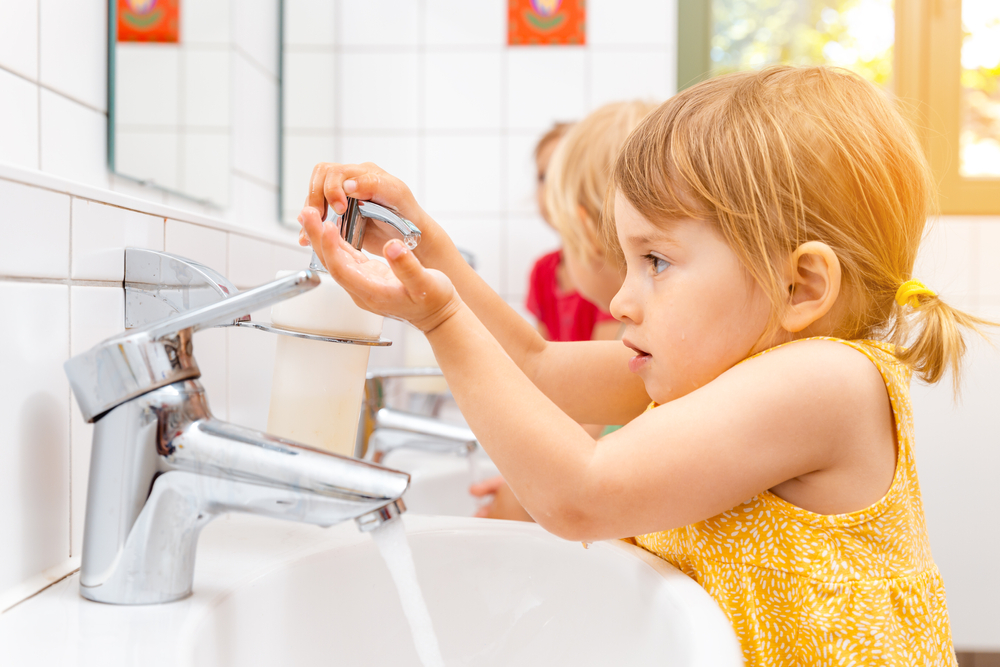
The taps in most commercial washrooms run longer than they need to. A standard manual tap relies on the person using it to turn it off promptly, which doesn't always happen. The numbers are striking: switching a small office of just seven people to sensor taps can save over 12,000 litres of water per year, worth around £42 at average UK commercial water rates. For a hotel, a school or a leisure centre running hundreds of uses a day across multiple washrooms, that figure multiplies quickly. A building with four washroom sets running at that level could be looking at over £1,000 a year in unnecessary water costs from the taps alone.
Sensor taps control water flow automatically, dispensing only when hands are present and cutting off the moment they're removed. They also reduce cross-contamination, since there's no tap handle to touch with dirty or wet hands. The guide to commercial taps for washrooms covers the full range of options available, but the core point is straightforward: smarter water control is one of the simplest and most cost-effective commercial bathroom upgrades available.
A few other noise-related factors worth considering when specifying for schools:
- Whether the washroom opens directly onto a classroom or corridor, as tiled surfaces amplify noise considerably
- Quiet Mark accreditation, awarded by the Noise Abatement Society, which provides independent verification of low noise performance
- The difference in noise tolerance between age groups, with younger primary pupils generally needing quieter options than secondary students
Noise is rarely a one-size-fits-all consideration in schools, which is why flexibility and adjustability in the dryer you choose can make a significant difference across different areas of the building. If noise is the primary concern, our quiet hand dryers range is a useful starting point for comparing models that have been specifically selected for low noise performance.
Vandal Resistance and Build Quality for High-Traffic Environments
Hand dryers face regular, sustained use from hundreds of pupils every day and in some cases deliberate vandalism. A dryer that isn't built for this kind of environment will fail much sooner than expected, creating additional maintenance and replacement costs that eat into already stretched budgets.
Vandal resistance covers several things: the robustness of the casing, the quality of the wall fixings and whether access to the internal components can be restricted. Security screws and concealed fixings on the underside of the unit are standard on most commercially rated dryers. However, it’s worth checking this specifically when comparing models for school use. A dryer that can be opened or tampered with is a liability. The better models in the hand dryers for schools range are rated for high daily usage and built with exactly this in mind.
Energy Efficiency and What It Means for School Budgets
School budgets are under significant pressure and energy costs are one of the easiest areas to make meaningful savings with the right equipment. The difference in running costs between a well-specified hand dryer and a poorly chosen one can run into thousands of pounds over the lifetime of the product and the difference between hand dryers and paper towels is even more pronounced.
Savings of up to 95% compared to paper towels are achievable with modern energy-efficient hand dryers. The reduction in consumable costs, waste management time and blocked drains from paper towel disposal all add up alongside the direct energy saving. When specifying for schools, the following are worth paying close attention to:
- Rated power in watts, with lower figures representing better energy efficiency
- Whether the dryer has an optional heat setting that can be turned off for maximum energy saving
- Department for Education compliance, specifically Technical Annex 2A, which sets out specification guidelines for hand dryers in educational buildings
- Cost per 1,000 dries as a useful comparison point between models
The low energy hand dryers range covers the most efficient options currently available if energy performance is the primary consideration.
HEPA Filtration and Why It's Worth Considering in School Washrooms

Most modern hand dryers already address the biggest hygiene concern through touchless, sensor-operated design. Without any physical contact with the unit, the risk of cross-contamination between users is significantly reduced compared to older push-button models or paper towels handled by multiple people. For the majority of school washrooms, a well-specified touchless dryer covers the hygiene well.
That said, HEPA filtration is a worthwhile additional feature for schools where air quality or infection control is a particular concern. A dryer with a HEPA filter cleans the air passing through the unit before it reaches the hands, removing bacteria, allergens and airborne particles in the process. This is especially relevant in schools with pupils who have asthma, respiratory conditions, or compromised immune systems. The Bamboo Bobbi Hand Dryer with HEPA Filter combines this filtration with a child-friendly design suited to primary school washrooms, while the Biodrier BioBot 2 takes it a step further with UV sterilisation alongside HEPA filtration. Both are worth considering where hygiene standards need to go above and beyond the baseline.
Doc M Compliance and Physical Accessibility in School Washrooms
Accessibility is a baseline requirement, not an optional extra. Any hand dryer specified for a school should meet Doc M compliance standards, which cover mounting height, projection from the wall and ease of use for people with disabilities. In a school environment this matters across the full range of users, including pupils with physical disabilities, wheelchair users and younger children who need the dryer positioned within comfortable reach.
Doc M compliant dryers are designed to be operable without requiring grip strength, dexterity, or specific hand positions, which makes them more accessible to a broader range of pupils. It's a straightforward requirement to check when comparing products and most commercially-rated dryers will confirm Doc M compliance in their specifications.
Why Dry Time and Washroom Throughput Matter in Schools
The bigger issue with slow hand dryers in schools is the bottleneck that forms during breaks and lunchtimes when large numbers of pupils pass through the washrooms in a short window of time. A dryer with a 25 to 30-second dry cycle creates queues and when pupils are in a hurry they simply won't wait. The result is wet hands wiped on uniforms and the whole purpose of the handwashing station undermined.
A dry time of around 10 to 15 seconds is the standard to aim for in most school locations. This keeps traffic moving during busy periods and gives pupils enough time to dry their hands properly without it feeling like an inconvenience. Speed and noise are often in tension with each other, so the choice of dryer needs to account for both rather than optimising for one at the expense of the other.
How to Work Out Usage and Choose the Right Spec for Your School
Not every washroom in a school has the same level of use and matching the specification to the actual footfall is important for both performance and value. Hand dryers are typically grouped into three usage tiers:
Savings of up to 95% compared to paper towels are achievable with modern energy-efficient hand dryers. The reduction in consumable costs, waste management time and blocked drains from paper towel disposal all add up alongside the direct energy saving. When specifying for schools, the following are worth paying close attention to:
- Low use covers up to 100 uses per day and suits quieter locations such as staff toilets or less-visited washrooms
- Mid use covers 100 to 300 uses per day and suits most standard school washrooms during term time
-
High use covers 300 or more uses per day and is relevant for main washroom blocks in larger schools
As a practical starting point, one high-speed hand dryer per three basins is a reasonable rule of thumb for most school washrooms. From there, you can refine the spec based on the number of pupils regularly using that facility and how often hand washing is expected to happen throughout the day. Getting this right matters because an underpowered dryer in a high-traffic washroom will fail far sooner than expected, while an overspecified model in a quiet location is an unnecessary cost. If you'd like help working through the numbers for your school, the team at Intelligent Hand Dryers is happy to advise.
The Best Hand Dryers for Schools Right Now
The following models have been selected for their suitability across different school environments, covering a range of budgets, noise levels and performance specifications.
Dryflow EcoForce
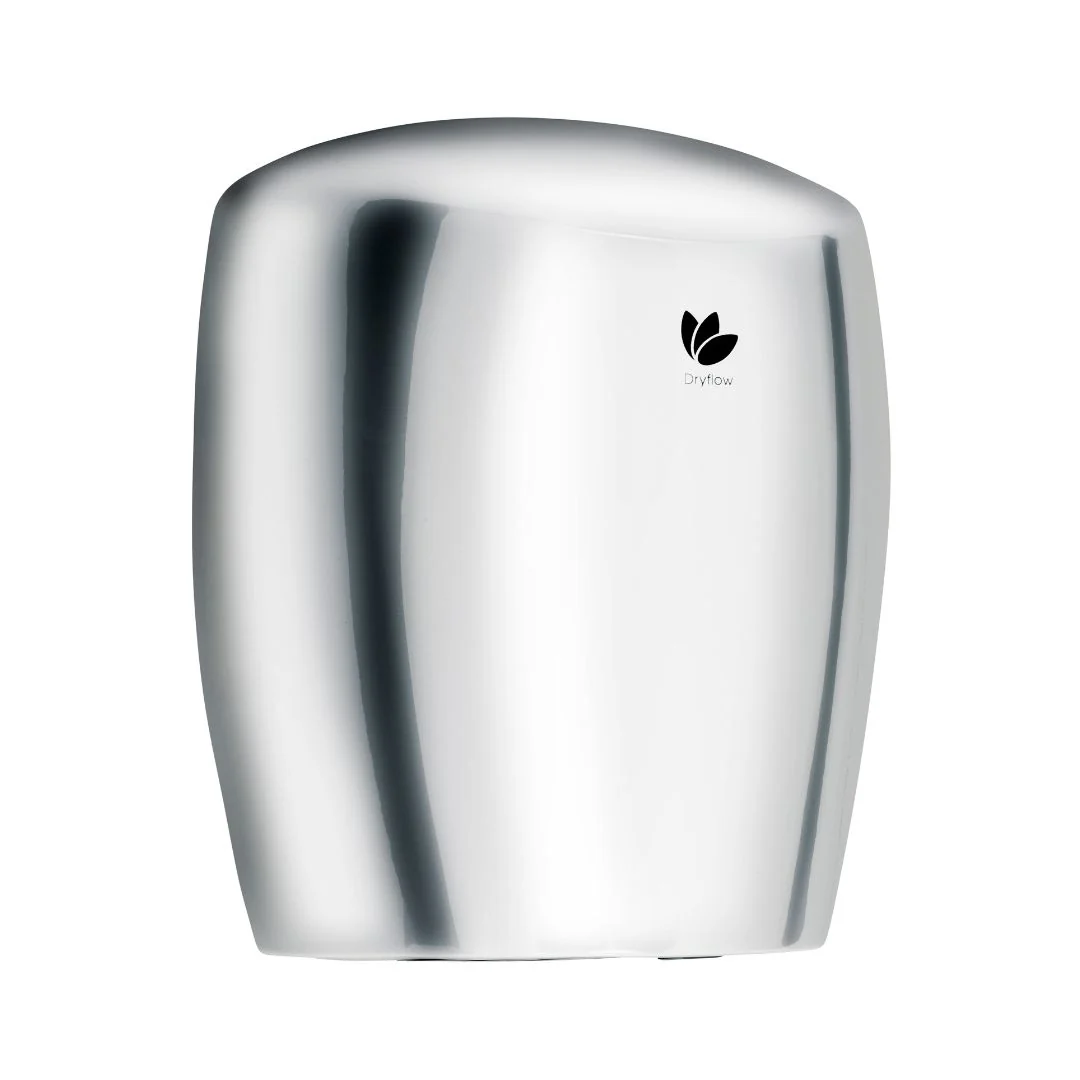
The EcoForce is one of the most popular choices for schools. It operates at 70 to 75 dB(A), which is quiet enough for most school locations, includes a built-in ioniser that reduces airborne contaminants and delivers a dry time of around 10 to 15 seconds. Security screws and concealed fixings make it resistant to tampering and running costs are minimal compared to paper towels. It's a reliable, practical dryer that covers the core requirements well without unnecessary complexity.
Mitsubishi Jet Towel Smart
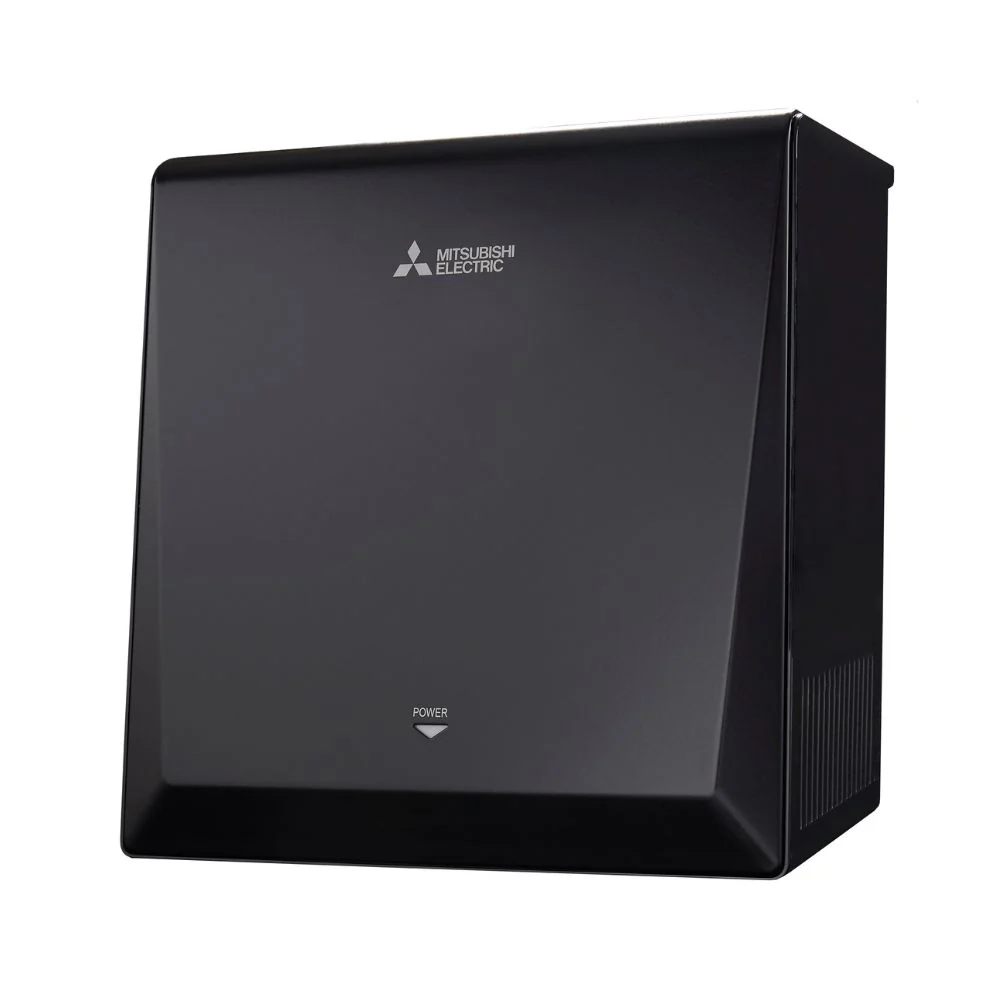
The Mitsubishi Jet Towel Smart Wave U02 consistently delivers 11-second dry times at noise levels well suited to noise-sensitive school environments. It's a hands-in dryer, meaning users insert their hands into the unit, which keeps water spray contained within the machine rather than spreading across the wall and floor. For secondary schools or staff washrooms where performance and quiet operation are both priorities, it's an outstanding choice.
Mitsubishi Jet Towel Slim
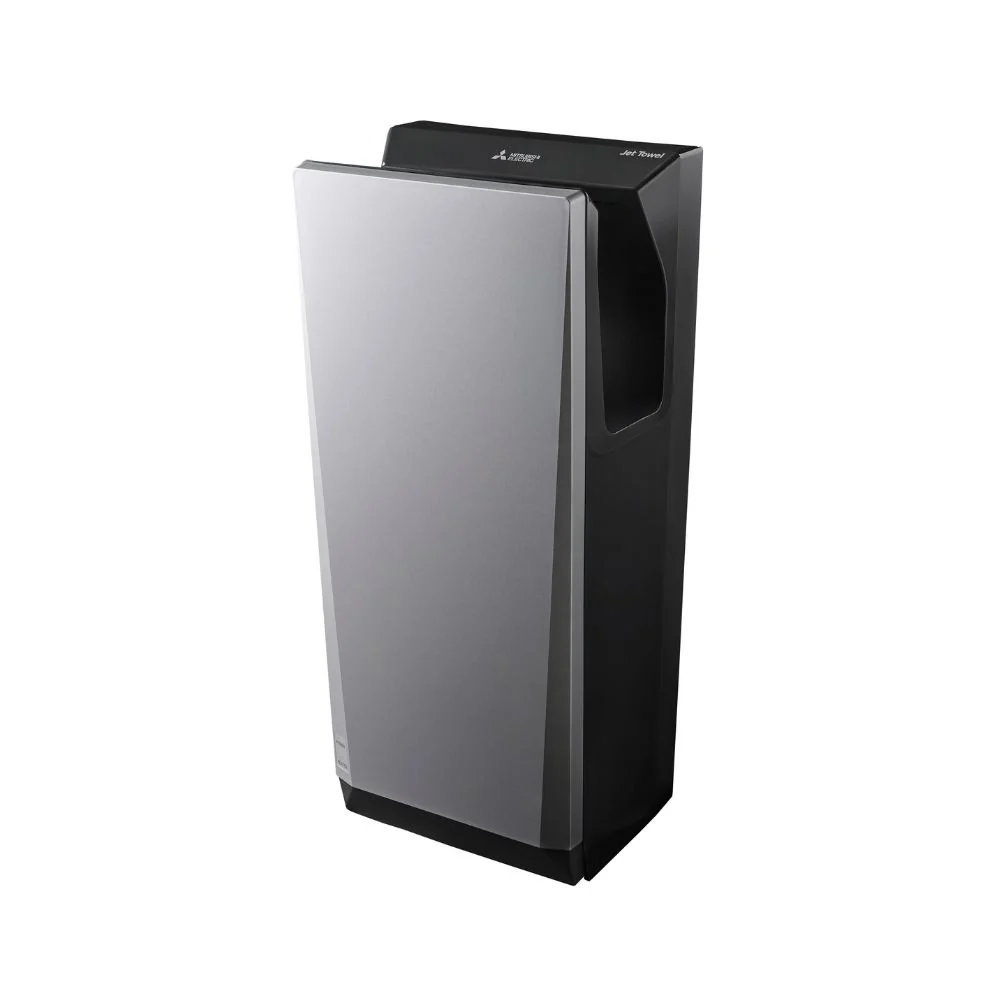
The Mitsubishi Jet Towel Slim Heated Wave I01 offers the same fast, quiet drying as the Smart in a slimmer profile suited to washrooms where wall space is limited. At just 58 dB(A), it's one of the quietest hand dryers on the market and works well in corridors adjacent to classrooms where noise transfer is a concern.
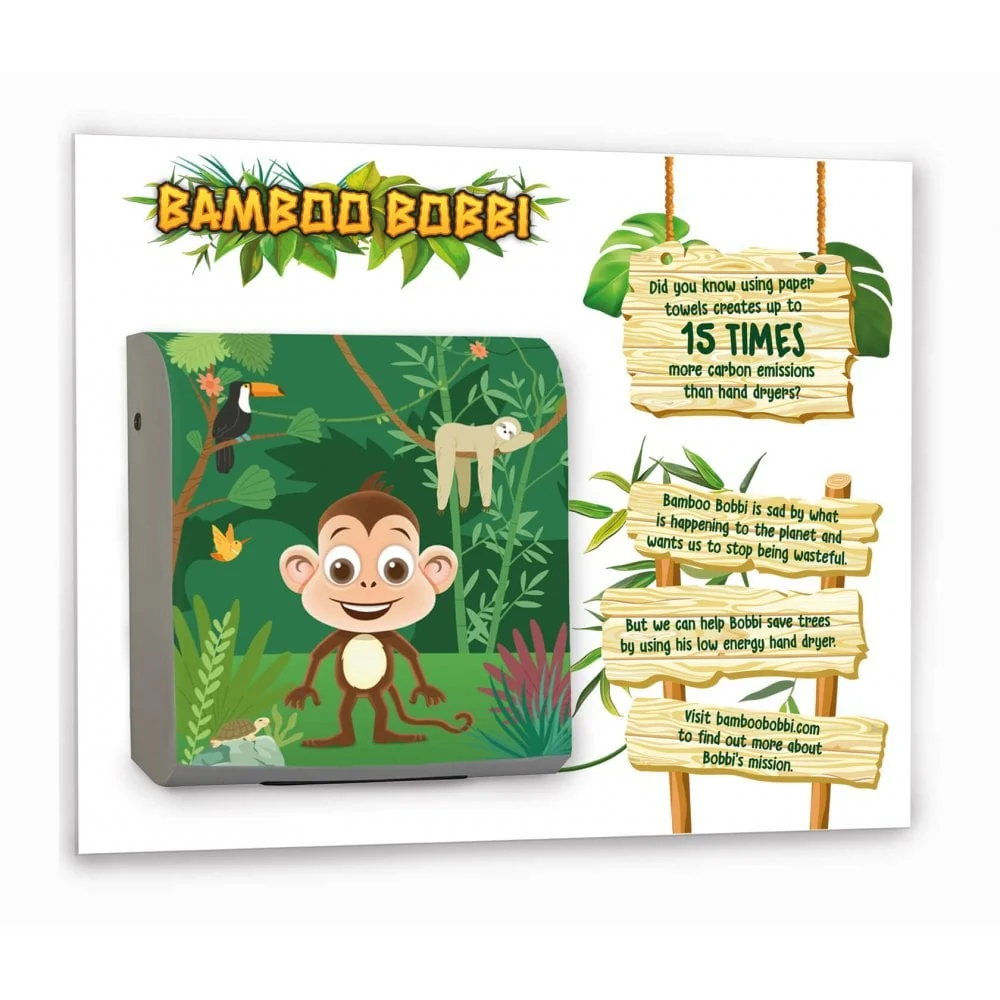
Bamboo Bobbi Hand Dryer with HEPA Filter
The Bamboo Bobbi is designed with younger children specifically in mind. Its approachable design helps reduce the anxiety some children feel around hand dryers and the HEPA filter captures 99% of bacteria and particles. It's a particularly strong choice for primary schools and early years settings where both design and hygiene matter.
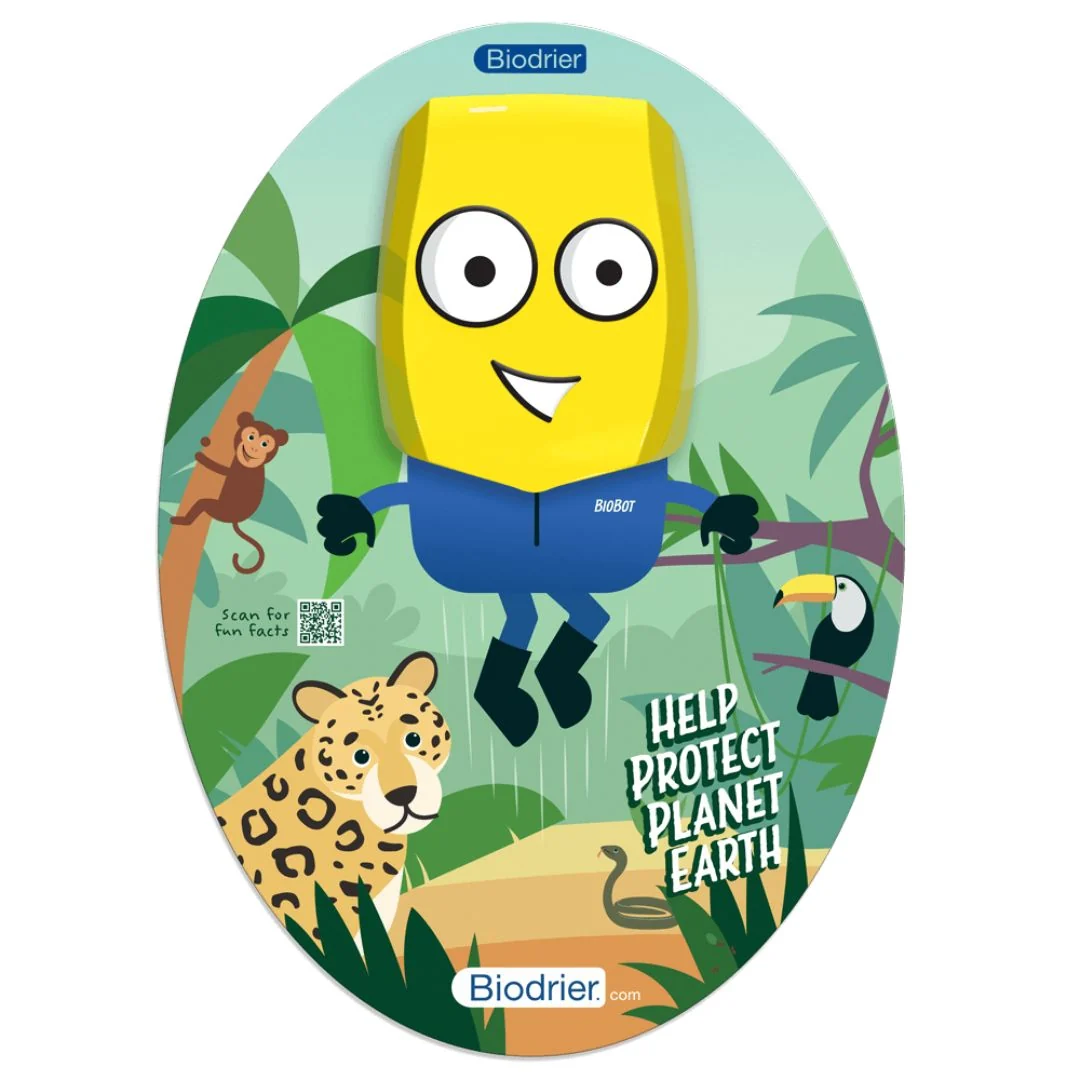
Biodrier BioBot 2
The Biodrier BioBot 2 combines HEPA filtration with UV sterilisation, making it one of the most hygienically thorough options in the range. The UV light sterilises the air before it reaches the hands and the HEPA filter provides an additional barrier against airborne bacteria and allergens. For schools where infection control is a particular priority, or where there are immunocompromised pupils, the BioBot 2 offers a level of hygiene performance that standard hand dryers can't match.
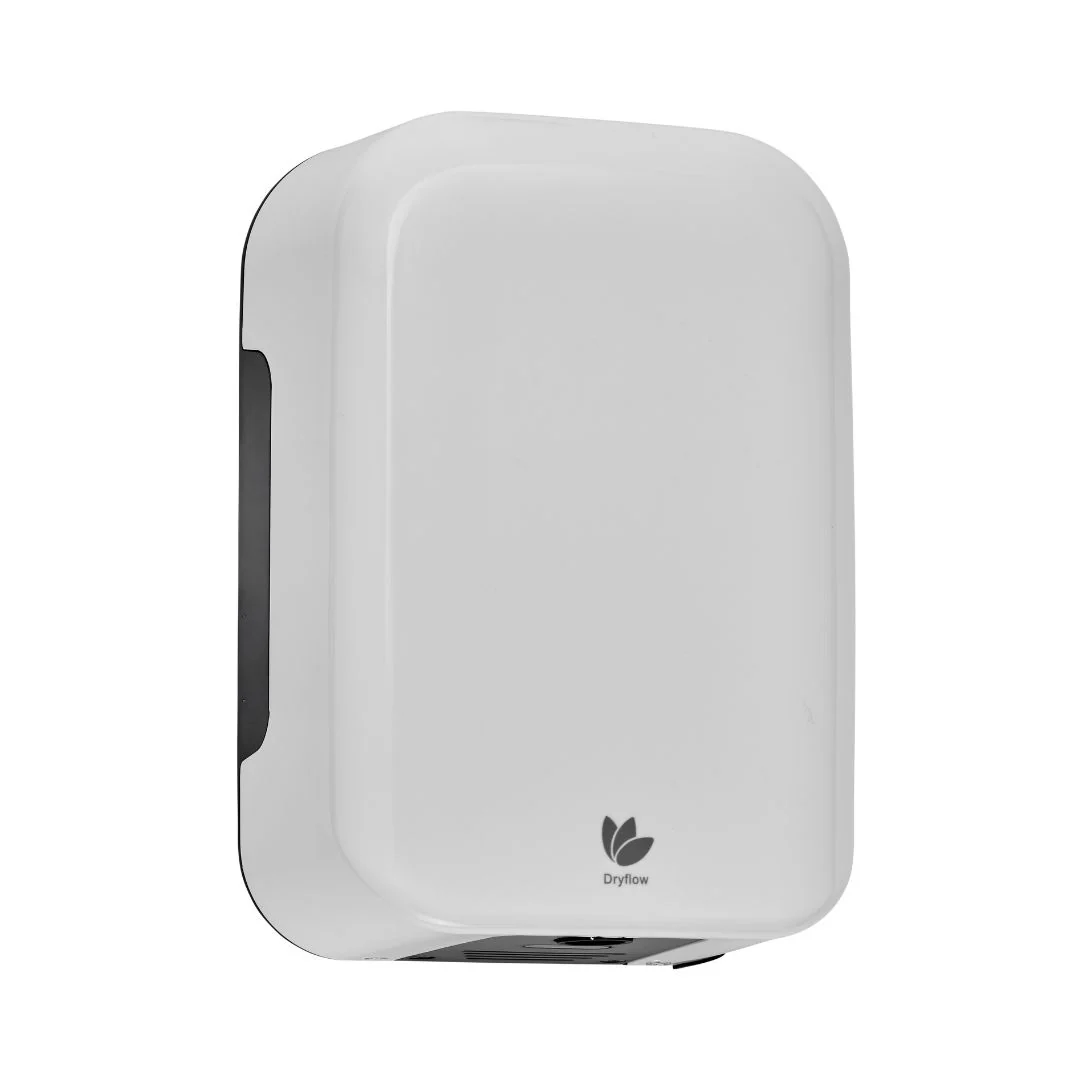
Dryflow Viska
The Dryflow Viska deserves a mention for schools with very specific noise or energy requirements. It's one of the world's most energy-efficient hand dryers, capable of running at just 120W without losing meaningful drying performance and it meets all Department for Education Technical manual. With a HEPA filter, brushless motor and very low noise output, it's a strong fit for primary schools and any environment where quiet operation is the top priority.
Choosing a hand dryer for a school requires more careful thought than most commercial environments. Noise levels, dry time, energy efficiency, vandal resistance, HEPA filtration and accessibility all need to be balanced against budget and the specific age groups using the space. Getting the specification right from the start means fewer replacements, better hand hygiene outcomes and a washroom that works for every pupil including those with sensory sensitivities and additional needs.
If you'd like help choosing the right hand dryer for your school, the team at Intelligent Hand Dryers is happy to advise. Browse the full hand dryers for schools range to see all the options, or get in touch and we'll help you find the right fit for your environment.

01143540047
02033270448