

Les sèche-mains sont un élément familier des toilettes modernes, contribuant à réduire le gaspillage de papier tout en favorisant l'hygiène quotidienne. Cependant, le filtre est une partie facile à négliger. Le fait de le maintenir propre et bien entretenu joue un grand rôle dans l'efficacité et l'hygiène du sèche-mains, en particulier dans les espaces très fréquentés.
Si vous êtes responsable de l'entretien des toilettes, savoir quand et pourquoi changer un filtre de sèche-mains peut aider à maintenir les appareils en bon état de fonctionnement, à améliorer la qualité de l'air et à éviter l'usure inutile. Ce guide explique ce qu'il faut surveiller et la fréquence habituelle des changements de filtre.
Pourquoi les filtres de sèche-mains sont importants
Les filtres de sèche-mains jouent un rôle clé dans le maintien de la propreté de l'air avant qu'il ne soit soufflé sur les mains des utilisateurs. Dans les sèche-mains dotés d'une filtration avancée, tels que les filtres HEPA, ils aident à piéger la poussière, les bactéries et les fines particules en suspension dans l'air ambiant. Cela favorise non seulement une meilleure hygiène dans les toilettes, mais rassure également les utilisateurs sur la propreté et la sécurité de l'air utilisé. Dans les toilettes très fréquentées ou partagées, ce niveau de propreté supplémentaire peut faire une réelle différence dans la perception de l'espace.
Comme tout filtre, les filtres de sèche-mains accumulent progressivement la saleté et les débris au fil du temps. S'ils ne sont pas changés régulièrement, le flux d'air peut être réduit, ce qui entraîne souvent des temps de séchage plus longs et plus de bruit pendant le fonctionnement. Un filtre obstrué peut également forcer l'appareil à travailler plus qu'il ne le devrait, augmentant l'usure des composants internes et pouvant raccourcir la durée de vie du sèche-mains. Les changements réguliers de filtre aident à maintenir des performances constantes et à éviter des problèmes d'entretien inutiles.
À quelle fréquence faut-il changer le filtre d'un sèche-mains ?
En règle générale, la plupart des filtres de sèche-mains doivent être vérifiés tous les trois à six mois, et un remplacement complet est généralement nécessaire environ une fois par an. Cela dit, il n'y a pas de réponse unique. La fréquence à laquelle un filtre doit être changé dépendra de l'intensité d'utilisation du sèche-mains et des conditions dans les toilettes. Les niveaux de poussière, la fréquentation et même les travaux de construction à proximité peuvent tous affecter la rapidité avec laquelle un filtre s'obstrue.
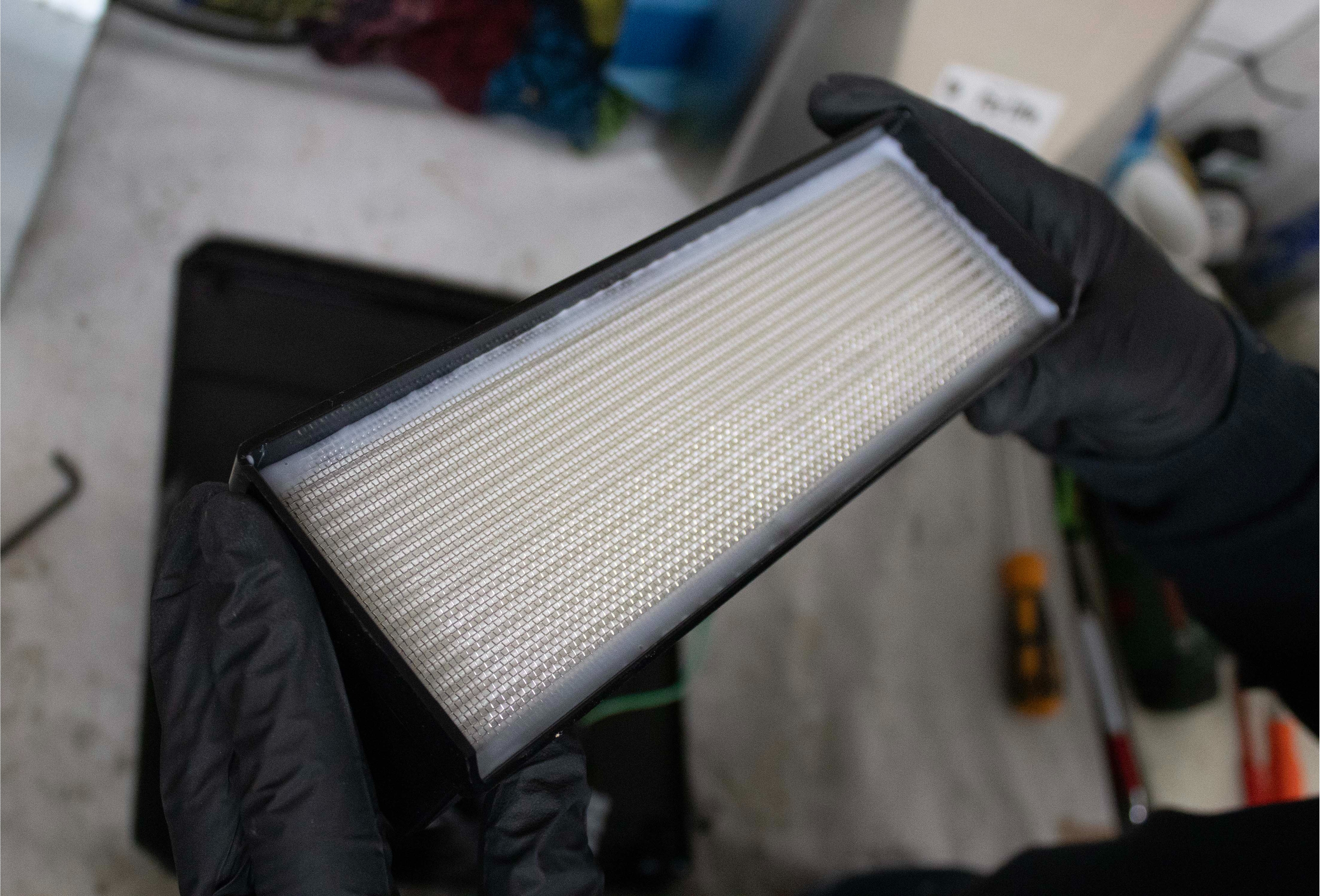
Dans les toilettes très fréquentées, comme celles des centres commerciaux, des écoles ou des centres de transport, les filtres ont tendance à s'encrasser beaucoup plus rapidement et peuvent nécessiter un remplacement plus fréquent. Dans les espaces plus calmes, comme les petits bureaux ou les installations réservées au personnel, vous pouvez espacer davantage les changements sans problème. Même dans ce cas, il est toujours préférable de consulter les recommandations du fabricant, car elles sont conçues pour assurer le fonctionnement sûr et efficace du sèche-mains le plus longtemps possible.
Signes indiquant que le filtre de votre sèche-mains doit être remplacé
Les filtres de sèche-mains ne tombent généralement pas en panne d'un coup, mais ils donnent quelques signes avant-coureurs lorsqu'ils ont besoin d'attention. Les détecter tôt peut vous éviter de plus gros problèmes par la suite et contribue au bon fonctionnement des toilettes. Si un sèche-mains ne fonctionne plus aussi bien qu'avant, le filtre est souvent le premier élément à vérifier.
Les signes courants indiquant qu'un filtre pourrait avoir besoin d'être remplacé sont les suivants :
- Flux d'air réduit ou temps de séchage plus longs
- Augmentation du bruit de fonctionnement pendant l'utilisation
- Une odeur de moisi ou de poussière perceptible
- Saleté ou accumulation visible autour de l'entrée d'air
- Plaintes des utilisateurs concernant les performances ou l'efficacité
Traiter ces signes à un stade précoce permet d'éviter une contrainte inutile sur les composants internes du sèche-mains et des réparations plus coûteuses à long terme. Cela contribue également à maintenir une expérience de toilettes plus propre et plus agréable pour tous les utilisateurs de l'espace.
Changement de filtre pour différents types de sèche-mains
La conception des sèche-mains joue un rôle important dans la rapidité avec laquelle les filtres s'encrassent et la fréquence à laquelle ils nécessitent une attention. La vitesse du flux d'air, les niveaux d'utilisation et l'emplacement d'installation affectent tous les performances du filtre. Connaître le comportement des différents types de sèche-mains facilite la planification de l'entretien et permet d'éviter des problèmes inutiles.
Sèche-mains puissants et à grande vitesse
Les sèche-mains à grande vitesse aspirent de grands volumes d'air pour offrir des temps de séchage rapides. Dans les toilettes très fréquentées, cela signifie que les filtres peuvent s'encrasser plus rapidement car plus de poussière et de particules en suspension dans l'air sont aspirées dans l'appareil. Si cela n'est pas vérifié, les performances peuvent progressivement chuter et les temps de séchage peuvent augmenter. Des vérifications régulières des filtres permettent à ces sèche-mains de fonctionner à leur vitesse prévue.
Sèche-mains à insertion
Les sèche-mains à insertion dirigent l'air étroitement autour des mains et comprennent souvent une filtration de qualité supérieure. Ces sèche-mains sont également fréquemment installés dans des endroits très fréquentés, de sorte que les filtres peuvent nécessiter un remplacement plus fréquent pour maintenir le flux d'air et la propreté.
Sèche-mains silencieux
Les sèche-mains silencieux sont conçus pour minimiser le bruit en contrôlant le flux d'air et la puissance du moteur. Lorsqu'un filtre s'obstrue, l'appareil peut devoir travailler plus fort, ce qui peut entraîner une augmentation du bruit pendant l'utilisation. Garder le filtre propre aide à préserver le fonctionnement plus silencieux que ces sèche-mains sont conçus pour offrir, en particulier dans les environnements sensibles au bruit.
Sèche-mains basse consommation
Les modèles basse consommation dépendent d'un flux d'air fluide et sans restriction pour fonctionner efficacement. Un filtre encrassé peut perturber cet équilibre, réduisant l'efficacité du séchage et augmentant potentiellement la consommation d'énergie. Un entretien régulier du filtre aide ces sèche-mains à rester efficaces et à maîtriser les coûts de fonctionnement à long terme.
Sèche-mains pour écoles
Les toilettes scolaires sont fréquemment utilisées tout au long de la journée, souvent par courtes périodes intenses. Cette utilisation intensive signifie que les filtres peuvent s'encrasser plus rapidement que dans de nombreux autres environnements. Des vérifications plus fréquentes aident à maintenir les normes d'hygiène et garantissent que les sèche-mains dans les écoles restent fiables pendant les périodes de forte affluence.
Sèche-mains minces et à robinet
Les sèche-mains minces et à robinet sont souvent choisis pour les toilettes modernes où l'espace et l'apparence sont importants. Comme tout sèche-mains, des vérifications régulières du filtre favorisent une bonne hygiène et contribuent à maintenir des performances fiables, en particulier dans les environnements très fréquentés.
Hygiène et conformité dans les toilettes commerciales
Dans les toilettes publiques et commerciales, le maintien de normes d'hygiène élevées est essentiel. Des filtres de sèche-mains propres aident à limiter la propagation de la poussière et des particules en suspension dans l'air, favorisant un environnement plus propre pour tous ceux qui utilisent l'espace. Lorsque les toilettes sont utilisées par de nombreuses personnes chaque jour, de petits détails comme l'entretien du filtre peuvent faire une différence notable. Cela montre également que l'installation est correctement entretenue, ce qui contribue à établir la confiance avec les utilisateurs.
Les changements réguliers de filtre peuvent facilement être intégrés à une routine d'entretien des toilettes plus large, aux côtés du nettoyage, des inspections et de l'entretien général. Cette approche proactive aide les installations à respecter les politiques d'hygiène internes et à répondre aux attentes générales de l'industrie. Elle peut également réduire le risque de plaintes ou de problèmes signalés lors des inspections.
Avantages en termes de durabilité et de coûts des changements de filtre réguliers
Prendre soin des filtres de sèche-mains n'est pas seulement bon pour l'hygiène, c'est aussi logique d'un point de vue de la durabilité. Lorsque les filtres sont propres, les sèche-mains peuvent déplacer l'air plus efficacement, ce qui contribue à réduire la consommation d'énergie et évite une contrainte inutile sur l'unité. Cela soutient une approche plus respectueuse de l'environnement de la gestion des toilettes, en particulier dans les bâtiments très fréquentés.

Un entretien régulier contribue également à prolonger la durée de vie des sèche-mains et réduit les risques de pannes imprévues. En évitant les problèmes de performance et en réduisant les réparations ou les remplacements anticipés, les changements de filtre peuvent aider à réduire les coûts de fonctionnement à long terme et à minimiser les perturbations. Au fil du temps, ces petites étapes d'entretien peuvent générer des économies significatives.
Meilleures pratiques pour l'entretien des filtres de sèche-mains
Le moyen le plus simple de maîtriser l'entretien des filtres est de l'intégrer à vos vérifications régulières des toilettes. Les filtres sont souvent hors de vue, c'est pourquoi les intégrer à une routine d'entretien existante permet de s'assurer qu'ils ne sont pas oubliés. Les équipes d'installations et les entreprises de nettoyage doivent savoir où se trouvent les filtres et comment les inspecter en toute sécurité sans endommager l'appareil. Tenir un simple registre de la date de la dernière vérification ou du dernier remplacement des filtres peut également faciliter grandement les choses, en particulier dans les bâtiments dotés de plusieurs toilettes ou sèche-mains.
Il est également important d'utiliser les filtres de remplacement corrects conçus pour chaque modèle de sèche-mains. Le respect des directives du fabricant garantit que le sèche-mains continue de fonctionner efficacement et en toute sécurité. L'utilisation des bons filtres réduit également le risque de problèmes de performances ou d'usure inutile au fil du temps. Un peu d'attention ici peut aider à éviter des problèmes d'entretien plus importants par la suite.
En résumé, les filtres de sèche-mains jouent un rôle essentiel dans l'hygiène, la performance et l'efficacité. Bien que la plupart des filtres doivent être remplacés au moins une fois par an, les environnements très fréquentés peuvent nécessiter des changements plus fréquents. Une inspection régulière, un remplacement en temps opportun et la compréhension de la façon dont l'utilisation affecte la durée de vie du filtre contribuent tous à maintenir des toilettes propres, fiables et durables.
Si vous ne savez pas quand les filtres de votre sèche-mains ont été changés pour la dernière fois ou si vous souhaitez des conseils sur l'entretien de votre équipement de toilettes, notre équipe est là pour vous aider. Contactez-nous pour obtenir des conseils sur l'entretien des filtres, l'entretien et le choix des bons sèche-mains pour votre espace.

01143540047
02033270448