Most businesses don't give much thought to what's actually in the air of their commercial washroom. The ventilation system runs, the extractor fan hums and the assumption is that's enough. It often isn't. In a high-traffic washroom, the air carries moisture from running water, volatile organic compounds from cleaning products, airborne particles from hand drying and the bacteria that thrive in warm, humid conditions. All of that accumulates faster than a standard ventilation system can clear it. There are five practical changes that make a real difference and this blog covers each one in detail.
Why Commercial Washroom Air Quality Matters More Than Most Businesses Realise
The UK government's indoor air quality guidance identifies washrooms as a particular concern in commercial buildings because of the combination of humidity, cleaning chemicals and high footfall. There are three things accumulate faster than standard ventilation can clear them:
- Moisture from running water, which creates the conditions for bacteria and mould to grow on surfaces and in the air
- VOCs released by standard cleaning products, which add a chemical load that builds up over time
- Airborne particles from hand drying, which are redistributed through the room if the dryer has no filtration
For most businesses the financial cost is indirect: staff and visitor perception of the space and the hygiene outcome for people using it regularly. In healthcare and food service the stakes are more direct and NHS infection prevention guidance treats washroom air management as part of a broader infection control picture in clinical settings.
1. HEPA Filtered Hand Dryers
A HEPA filter in a hand dryer does two things. It cleans the air drawn into the unit before it's blown over the user's hands and it continuously filters washroom air as the dryer operates. In a busy washroom seeing 300 or more uses a day, a HEPA-filtered dryer is drawing large volumes of air through its filtration system and returning cleaner air to the room on every cycle. H13 grade HEPA filtration removes 99.95% of particles as small as 0.1 microns, including bacteria, dust, pollen and mould spores. Most modern commercial hand dryers are already touchless, which removes one of the main contact transmission routes without any additional specification. A HEPA filter goes a step further by addressing airborne transmission as well, which is a meaningful upgrade in high-footfall washrooms or anywhere infection control carries extra weight.
The full range of HEPA filtered hand dryers at Intelligent covers every usage level and specification.
Dryflow BulletDri Hand Dryer with HEPA
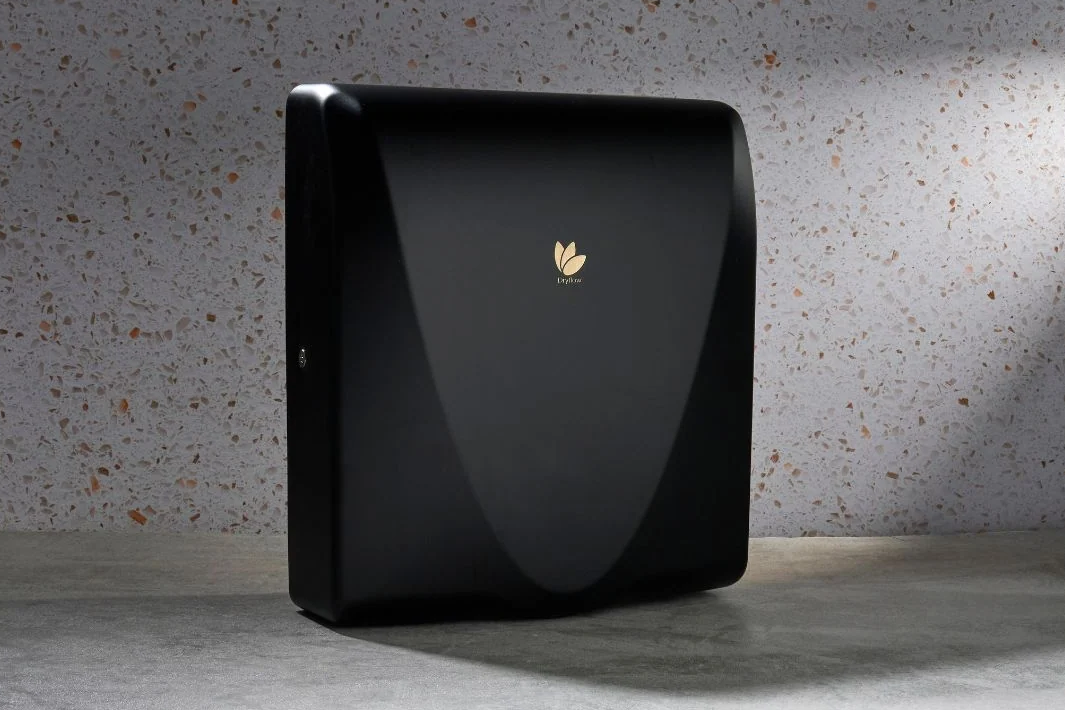
The Dryflow BulletDri Hand Dryer with HEPA includes a high-grade HEPA filter which purifies the air taken into the hand dryer. Nothing but clean air is blasted over the hands. It also feature a speed dial and on/off heat switch for maximum adjustability. It runs at 550W to 1.5kW with 2,727 dries possible per £1 of electricity and is part of the Dryflow carbon neutral range.
2. Hand Dryers with Ionisers
An ioniser works differently to a HEPA filter. Where a filter captures particles as air passes through it, an ioniser actively emits negative ions into the room. Those ions attach to airborne particles including bacteria and allergens, causing them to clump together and fall out of the air rather than remain suspended. The result is a continuous improvement in air quality across the washroom between dryer cycles, not just during use. Below is an example of a dryer that combines this technology with HEPA filtration, and one we think works well.
Mediclinics Machflow Plus HEPA & Ioniser Hand Dryer
The Mediclinics Machflow Plus HEPA & Ioniser pairs HEPA filtration with an ioniser in a single unit. The HEPA element captures 99.9% of bacteria from the airstream before it reaches the user's hands. It runs as quietly as 68 dB at 250W minimum power, carries a 20-year guarantee and is one of the most complete air quality hand dryers available for a commercial washroom.
3. Carbon Filters and Odour Control
Standard ventilation moves air around a washroom but doesn't neutralise the compounds causing odour. A carbon filter does something different. As air passes through the carbon medium, gases are trapped within it rather than dispersed back into the room. The Dualflow® Plus Eco from Mediclinics has this carbon layer built directly into its HEPA filter, so odour control happens passively as the dryer operates, without any additional hardware.
For washrooms with persistent odour issues this is a more targeted approach than an air freshener, which masks the smell rather than addressing it. The Dualflow® Plus Eco also supports an optional odour neutraliser accessory that emits a controlled fragrance through the unit during operation, adding active scent management if the washroom needs it.
4. Sensor Taps and Reducing Humidity
Humidity is one of the primary drivers of poor washroom air quality. Standing water, splash accumulation on surfaces and the warm, damp conditions created by high flow rate manual taps all contribute to an environment where bacteria and mould can establish and spread. The relationship between moisture control and air quality is direct: less humidity means fewer conditions for airborne bacteria to thrive.
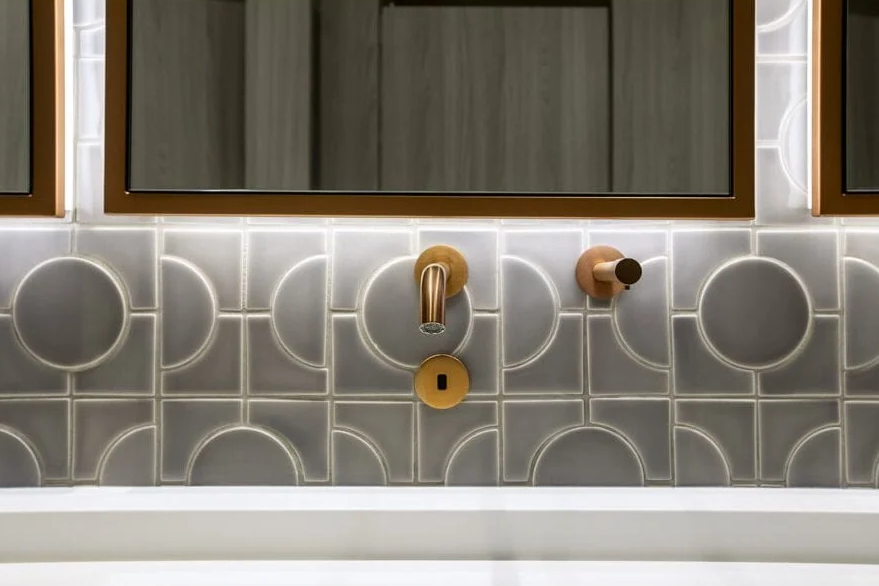
Sensor taps address this at the source. A quality automatic tap delivers as little as 1.9 litres per minute compared to 10 to 15 litres for a standard manual tap, activates only when hands are detected and cuts off immediately on withdrawal. The reduction in water flow into the basin translates directly into less splash, less surface moisture and lower overall humidity in the room. Sensor taps in commercial washrooms deliver on hygiene, water saving and operational efficiency simultaneously. WRAS-approved options from DELABIE, Dolphin and The Splash Lab are available across the sensor tap range.
5. Standalone Air Purifiers for the Washroom
For environments where washroom air quality is a genuine priority beyond what hand dryers alone can address, including healthcare facilities, food preparation areas and high-footfall public venues, a standalone air purifier adds continuous whole-room filtration independent of hand dryer usage cycles. Two products in the Dyson Air Care range are particularly well suited to commercial washroom applications.
Dyson Purifier Big + Quiet Formaldehyde BP04 Purifying fan
The Dyson BP04 purifies, humidifies and cools simultaneously. Its three-stage filtration system includes:
- A HEPA H13 filter capturing 99.9% of particles as small as 0.1 microns
- An activated carbon layer removing gases, odours and VOCs
- A catalytic oxidisation filter that continuously destroys formaldehyde rather than capturing and releasing it
Air quality is monitored and displayed in real time via the MyDyson app, which also allows remote adjustment. For a washroom in a healthcare or food service environment where air quality is a compliance consideration, the BP04 provides a level of continuous monitoring and filtration that passive ventilation can't match.
Dyson Purifier Hot+Cool HP1 Purifying fan heater
The Dyson HP1 adds heating to the purification capability, making it suitable for washrooms that need year-round temperature management alongside air quality improvement. It uses the same three-stage HEPA H13 and activated carbon system as the BP04, projecting purified air throughout the room and displaying live air quality readings on the LCD screen. The Dyson Air Care guide works through the full Dyson purifier range for anyone comparing specifications.
Why Filter Maintenance Is the Step Most Businesses Skip
None of the above delivers its intended benefit if the filters are overdue for replacement. A blocked HEPA filter doesn't clean air. It restricts airflow, forces the motor to work harder and returns unfiltered air to the room, which is the opposite of the intended outcome. In high-traffic environments, HEPA filters in hand dryers should be inspected monthly and replaced at least once a year depending on usage level.
Replacement filters and accessories for all major hand dryer brands are available at Intelligent. Using the manufacturer-specified filter for each model matters as a filter that doesn't seat correctly won't provide the seal needed for full filtration performance. A schedule for filter inspection is one of the most cost-effective commercial washroom maintenance decisions available.
Why the Best Results Come From Getting the Full Washroom Right
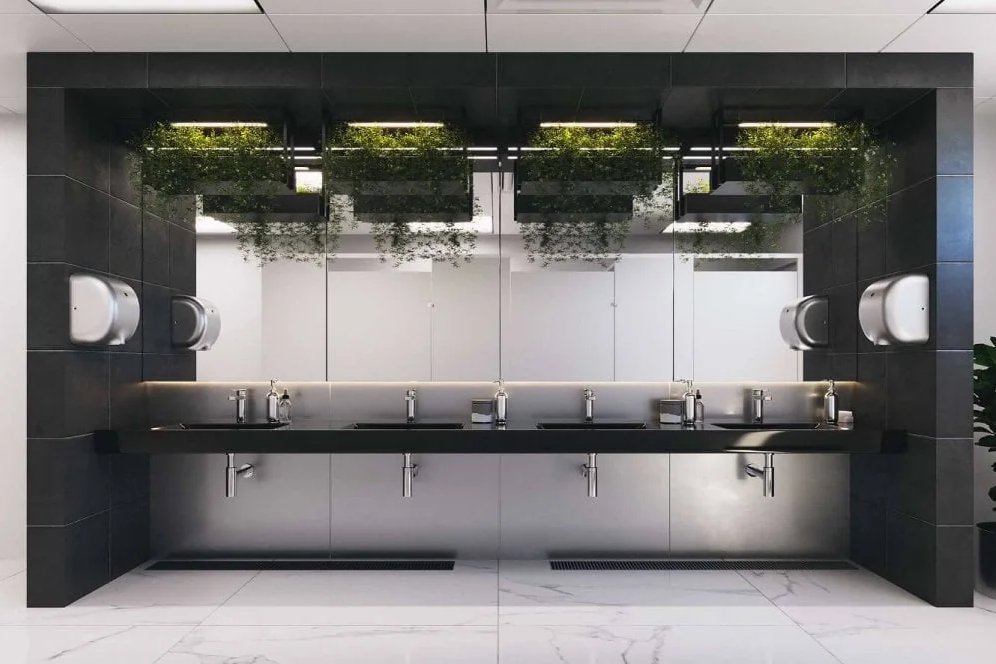
The best outcome in washroom air quality comes from treating each element as part of a system rather than specifying each product in isolation:
- Sensor taps reduce humidity at source
- Soap dispensers remove a contact point and the hygiene risk that comes with shared surfaces
- A HEPA-filtered hand dryer cleans the air during drying cycles
- A standalone air purifier provides continuous background filtration across the whole room
Each element reinforces the others. For any business specifying or refurbishing a washroom where air quality, hygiene and user experience all need to be addressed together, the all-in-one commercial washroom solutions range pulls the key products into a single specification. The financial case for getting the full specification right goes beyond air quality alone.
Improving washroom air quality in a commercial space is a matter of addressing the right variables: airborne particles through HEPA filtration, bacteria through ionisers, odours through carbon filters, humidity through sensor taps and background air quality through standalone purifiers. Each has a role and maintaining the filtration systems that make them work is as important as specifying the right products in the first place.
To talk through the right setup for your washroom, talk to our team today on 0114 354 0047 or get in touch online and we'll put together a specification that works for your space and usage level.

01143540047
02033270448