

There's a moment that plays out in almost every commercial washroom, countless times a day. Someone walks in, washes their hands, dries them properly and then grabs the exit door handle on the way out. That handle has been touched by hundreds of other people throughout the day and in a matter of seconds, all that hand hygiene effort is undone. Most people don't give it a second thought.
It's one of the most overlooked hygiene gaps in any commercial space and it's the exact kind of problem that antibacterial door handles are built to address. This guide covers everything you need to know about antibacterial door handles for commercial washrooms. How the technology works, which products suit different door types, and why it makes good commercial sense regardless of the size or sector of your business.
Why Washroom Door Handles Are One of the Biggest Hygiene Risks in Any Building
Most conversations about washroom hygiene focus on handwashing, soap dispensers and hand drying. All of those things matter, but there's a critical point in the journey that tends to get overlooked: the moment someone reaches for the door to leave. The exit door handle is one of the most-touched surfaces in any building and it's more of a hygiene risk than most people realise. While it's primarily touched by people on their way out, research suggests that a significant proportion of people leave public washrooms without washing their hands properly, or at all. That means the exit handle picks up contamination constantly throughout the day, regardless of how good the handwashing facilities are. Door handles are one of the most consistent sources of cross-contamination in shared washrooms, something we explore in our guide on washroom hygiene failures and it's a problem that cleaning schedules alone simply can't keep on top of.
How Long Does Bacteria Live on Door Handles
Longer than most people would expect. Research published in the Journal of Hospital Infection found that common pathogens including MRSA, E. coli and norovirus can survive on hard surfaces for hours and, in some cases, days. The NHS has also highlighted how easily bacteria transfers from contaminated surfaces through everyday contact, which is part of why hand hygiene guidance continues to emphasise both washing and avoiding unnecessary surface contact. Door handles in shared washrooms are among the highest-risk surfaces for this kind of bacterial transfer, largely because of how frequently they're touched by different people throughout the day.The World Health Organisation has long highlighted environmental surface contamination as one of the key routes through which infections spread in shared spaces, with washroom touchpoints consistently at the top of that list. In a busy commercial setting, the risk is real and constant.
How Do Antibacterial Door Handles Work
Antibacterial door handles, along with products like handle wraps, push pads and push plates, have antimicrobial technology built directly into the material or surface coating. Rather than relying on cleaning products to do all the heavy lifting, they actively inhibit bacterial growth on the surface around the clock. That's what makes them so well-suited to high-traffic environments where a door might be touched dozens of times between cleans.The three main technologies used across the market are:
- Silver ion technology: releases ions that break down bacterial cell membranes and stop them from reproducing
-
Copper-based materials: naturally antimicrobial and proven to significantly reduce bacterial presence on surfaces, with a long and well-documented track record
- Antimicrobial polymer coatings: applied to standard materials to give them bacteria-fighting properties, without changing how the product looks or functions.
What sets these products apart from a standard handle is that they don't just deal with bacteria present at a given moment. They work continuously between cleans, keeping surface bacterial levels low regardless of how frequently the door is touched. You can browse the full range of independently tested options in our antibacterial door handle collection, which features Veraco products certified to reduce surface bacteria by up to 99.9%.
UK Health and Safety Obligations for Commercial Washroom Hygiene
Under the Health and Safety at Work Act 1974 and the Workplace (Health, Safety and Welfare) Regulations 1992, employers have a legal duty to maintain a safe and hygienic working environment for their staff. That includes washroom facilities. While there's no regulation that specifically mandates antibacterial door handles, businesses that can demonstrate they've taken reasonable steps to reduce infection risk are in a much stronger position, both legally and reputationally, should a hygiene-related issue ever arise.The Health and Safety Executive is clear that employers should consider all reasonably practicable measures to protect people in the workplace and high-touch surfaces in shared washrooms fall squarely within that scope. Installing antibacterial hardware is a straightforward, documented step that shows genuine consideration for the people using your facilities every day.
Which Antibacterial Door Handles Do You Need
One of the most practical things about modern antibacterial door hardware is the variety of formats on offer. Whether your doors are pulled or pushed, whether you want something retrofitted or fitted properly from scratch, there's a solution that'll suit your setup.Handle Wraps
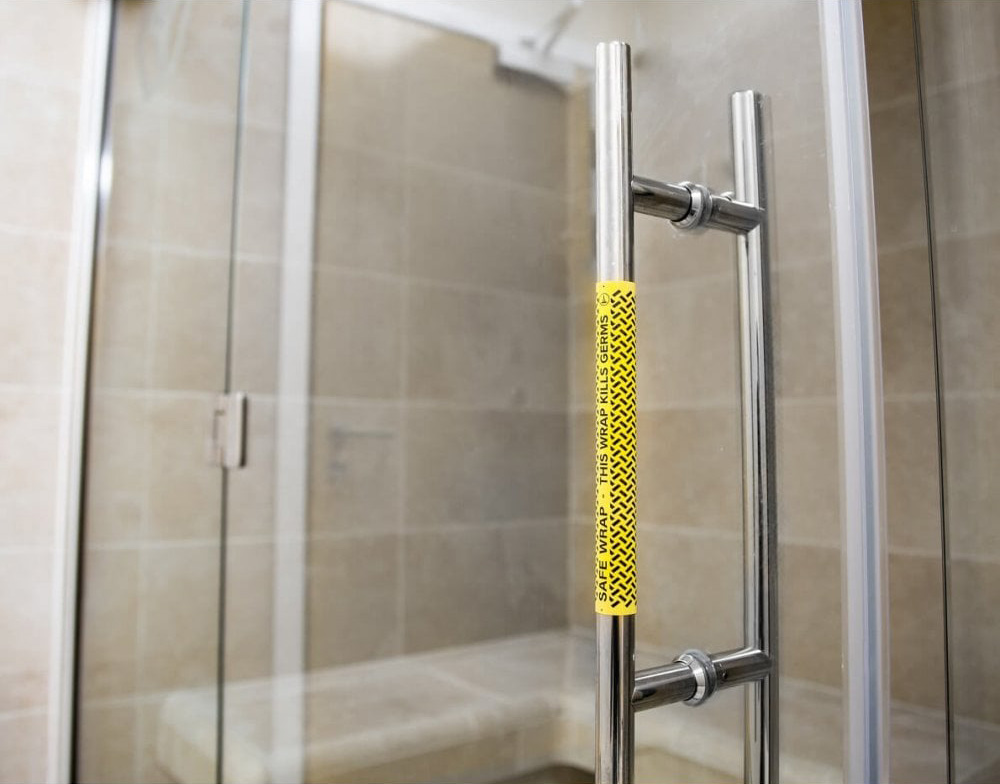
Handle wraps fit directly over your existing door hardware, making them one of the simplest and most cost-effective ways to add antimicrobial protection without replacing anything. The Veraco Safe Wrap Antibacterial Pull Door Handle Wrap fits neatly over most standard commercial pull handles at 100mm x 250mm and gets to work straight away. For spaces where you'd prefer something more discreet, the Veraco Safe Wrap Clear offers the same level of protection in a transparent finish that blends in with any door design.
Temporary Push Pads for High-Footfall Push Doors
For doors that are pushed rather than pulled, the Veraco Safe Pad Antibacterial Push Pad (Large) covers a wide contact area, which is particularly useful in busy washrooms where people push doors open with their hands, wrists, or forearms. The larger surface means more of the contact zone is protected, rather than just a narrow area.
Long Term and Durable Push Pads
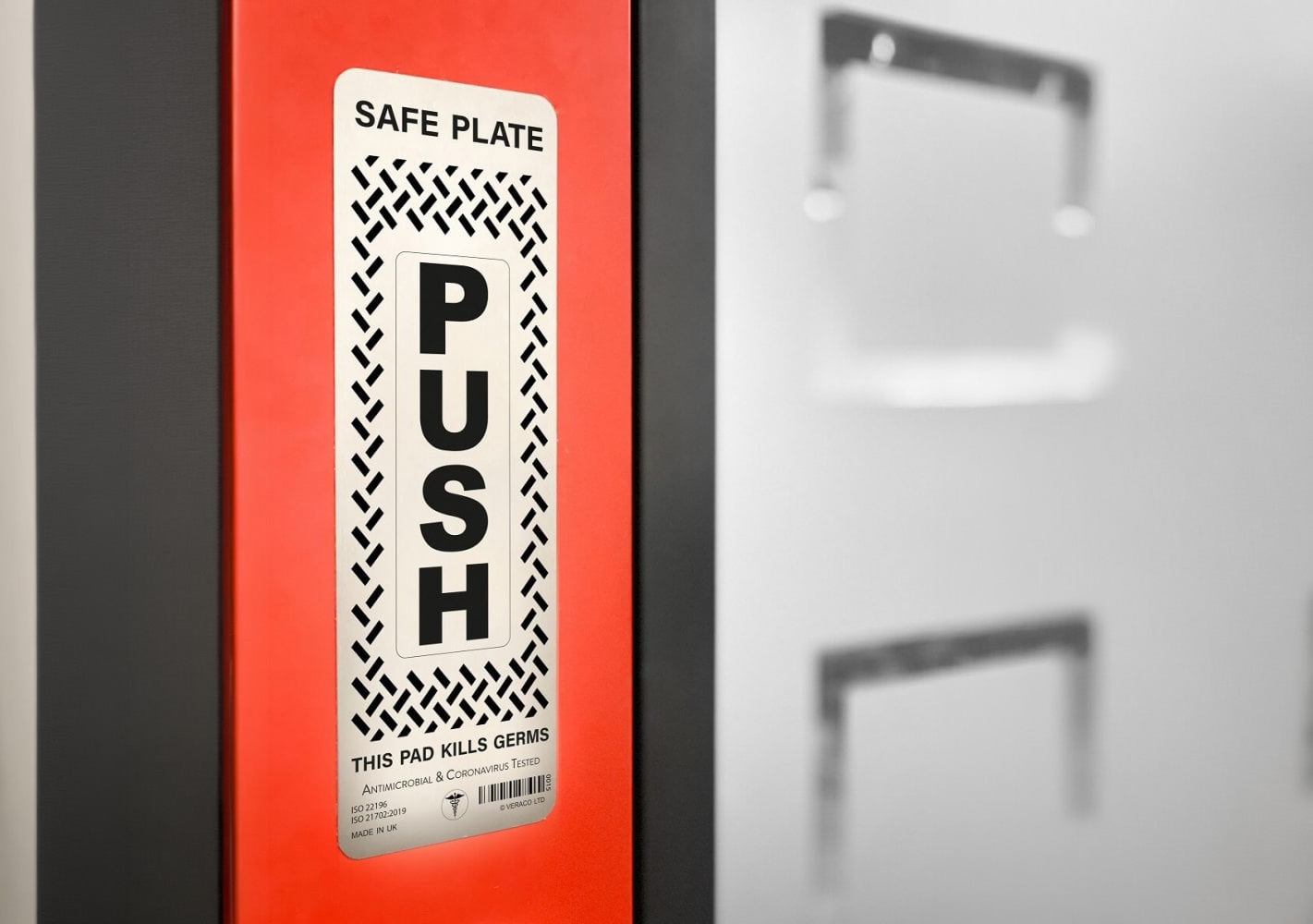
For a more fixed, long-term solution, the Veraco Safe Plate Antibacterial Aluminium Push Plate is the one to go for. Where the wraps and push pads retrofit over existing hardware, the aluminium push plate is a more permanent fixture. It's tougher, corrosion-resistant and far more durable than polymer alternatives, holding up well against heavy daily use and the cleaning chemicals that would degrade cheaper surfaces over time. If you want something built to last, it's the step up worth considering.
How to Install Antibacterial Door Handles in a Commercial Washroom
A lot of businesses hold off on upgrading their washroom hardware because they assume it means closing the washroom, bringing in contractors and spending far more than the improvement warrants.In most cases, it's much more straightforward than that. Products like handle wraps and push pads are designed to retrofit directly over existing hardware without specialist tools or any significant disruption to your day. They go on quickly and start working straight away. For facilities managers looking to raise hygiene standards without committing to a full washroom refit, that's a useful advantage. It's the kind of small, practical upgrade that makes a real difference from day one.
The Business Case for Antibacterial Door Hardware
Beyond the hygiene benefits, there's a strong business case for making this investment and it goes further than just ticking a compliance box. Staff sickness is an ongoing cost for UK businesses of all sizes. The Office for National Statistics has consistently reported that illness picked up through everyday surface contact in shared spaces is among the leading causes of workplace absence and washrooms are one of the most common places that transfer happens. Reducing the bacterial load on high-touch surfaces like washroom door handles is a practical step towards a healthier working environment and fewer sick days overall.There's also the question of perception. In hospitality, retail, leisure and healthcare, the state of your washroom reflects directly on your business. A washroom that's clearly invested in hygiene, right down to the door hardware, signals a standard of care that customers and clients notice. In a world where hygiene awareness is far higher than it was pre-COVID, that matters more than it once did.
How Antibacterial Handles Fit Into a Wider Washroom Hygiene Strategy
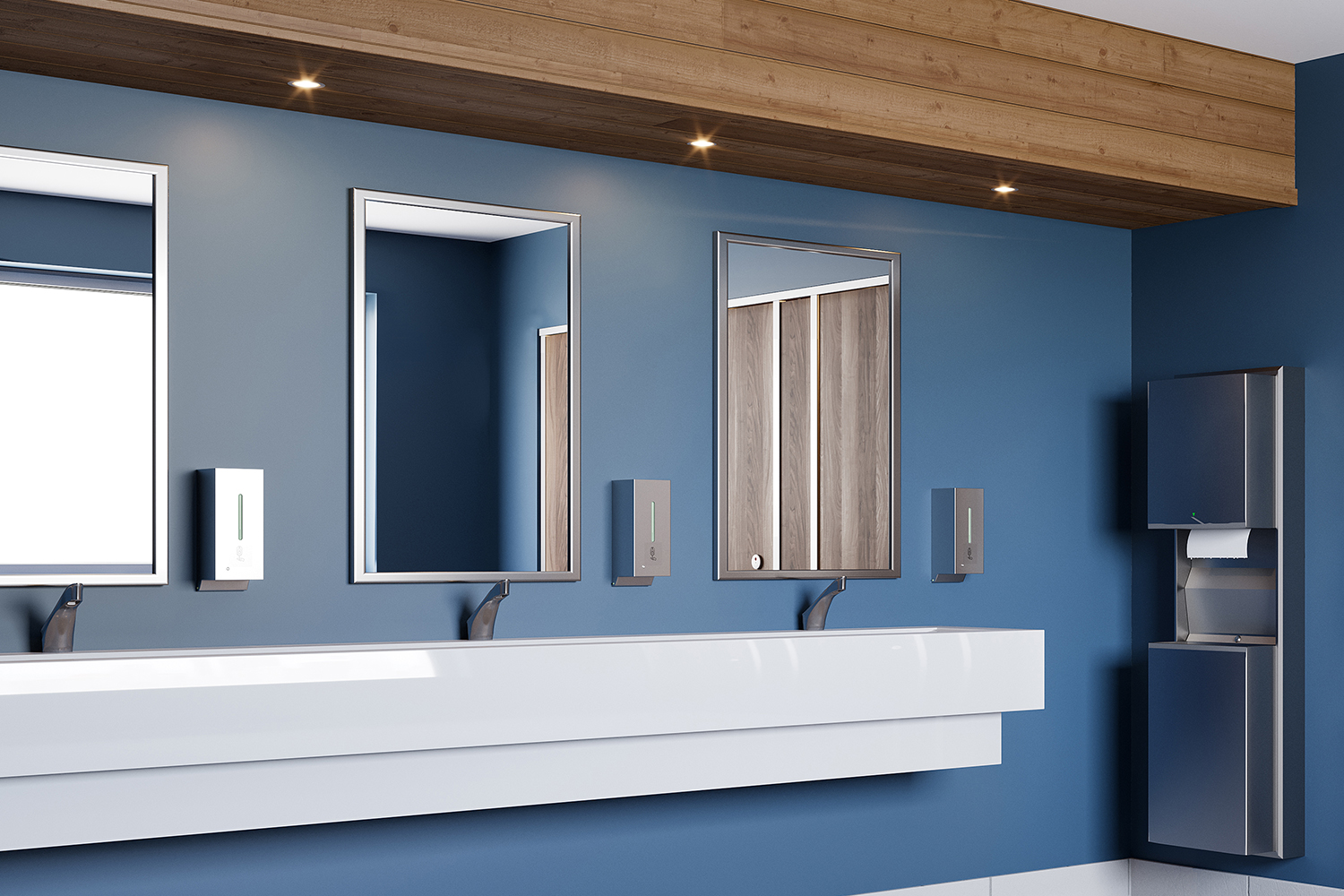
Antibacterial door handles work best as part of a broader hygiene approach rather than as a standalone fix. The aim is to reduce the opportunity for bacterial transfer at every stage of the washroom experience. That means thinking about the full picture:Soap
Keeping dispensers consistently stocked so handwashing is never skipped out of convenience
Hand drying
Wet hands spread bacteria far more easily than dry ones, so effective drying is a non-negotiable part of the chain
Touch-free fixtures
Taps, dispensers and hand dryers that cut out unnecessary contact points throughout the washroom
Antibacterial surface hardware
Door handles, push pads and push plates that keep surfaces safer between cleaning rounds.
It's also worth revisiting some common assumptions about washroom hygiene. Paper towels, for instance, are often assumed to be the more hygienic hand drying option, but that's not always what the evidence shows. Our post on 3 reasons to ditch paper towels right now goes into this in more detail, but for most commercial washrooms, a well-chosen electric hand dryer is both a more hygienic and more sustainable choice.
What to Look for When Buying Antibacterial Door Handles
Not all antibacterial products deliver what they claim to, so knowing what to look for before you buy saves time, money and disappointment. The main things to consider are:Independent testing and certification
Look for products tested to ISO 22196, the international standard for measuring antimicrobial activity on non-porous surfaces. Independent certification carries far more weight than a manufacturer's own marketing claims
Specific efficacy figures
Products that state a precise bacterial reduction percentage, such as 99.9%, are more credible than vague or unverified language
Material durability
Commercial washroom hardware takes a lot of daily use and aluminium and robust antimicrobial polymers tend to hold up best over time
Ease of cleaning
Antimicrobial properties support your cleaning schedule, they don't replace it. Check that the surface can be wiped down easily with standard commercial cleaning products
Fit and compatibility
For wraps and retrofit products especially, always double check the dimensions against your existing door hardware before ordering
Taking a little time to check these things before you commit means you'll end up with a product that does what it's supposed to, lasts well and fits seamlessly into your existing washroom setup. The Veraco range ticks all of these boxes, which is why it sits at the heart of our antibacterial door handle collection.
Commercial washroom hygiene doesn't stop at the sink. Door handles are among the most-touched surfaces in any building and in high-footfall environments they're one of the most significant points of bacterial transfer, yet they're often the last thing on a hygiene checklist. Antibacterial wraps and push plates offer a practical, well-evidenced way to reduce that risk continuously between cleaning rounds, without needing a full washroom overhaul. Pair them with the right hand drying solution and touch-free fixtures and you've got a washroom that's working hard for hygiene at every stage.
If you're ready to take the next step, browse the full range of antibacterial door handles or get in touch with our team for advice on the right solution for your space.

01143540047
02033270448